


Knowing when to bring in a fractional CFO isn’t about reaching a certain revenue milestone. It’s about recognizing when your business has become too complex to manage without strategic financial leadership.
For ecommerce founders, that tipping point often arrives quietly. One day you realize cash flow feels unpredictable, inventory decisions are getting harder to make, and you’re not sure whether growth is helping or hurting your bottom line. That’s usually the signal it’s time to bring in an Ecommerce Fractional CFO.
1. When Growth Outpaces Simplicity
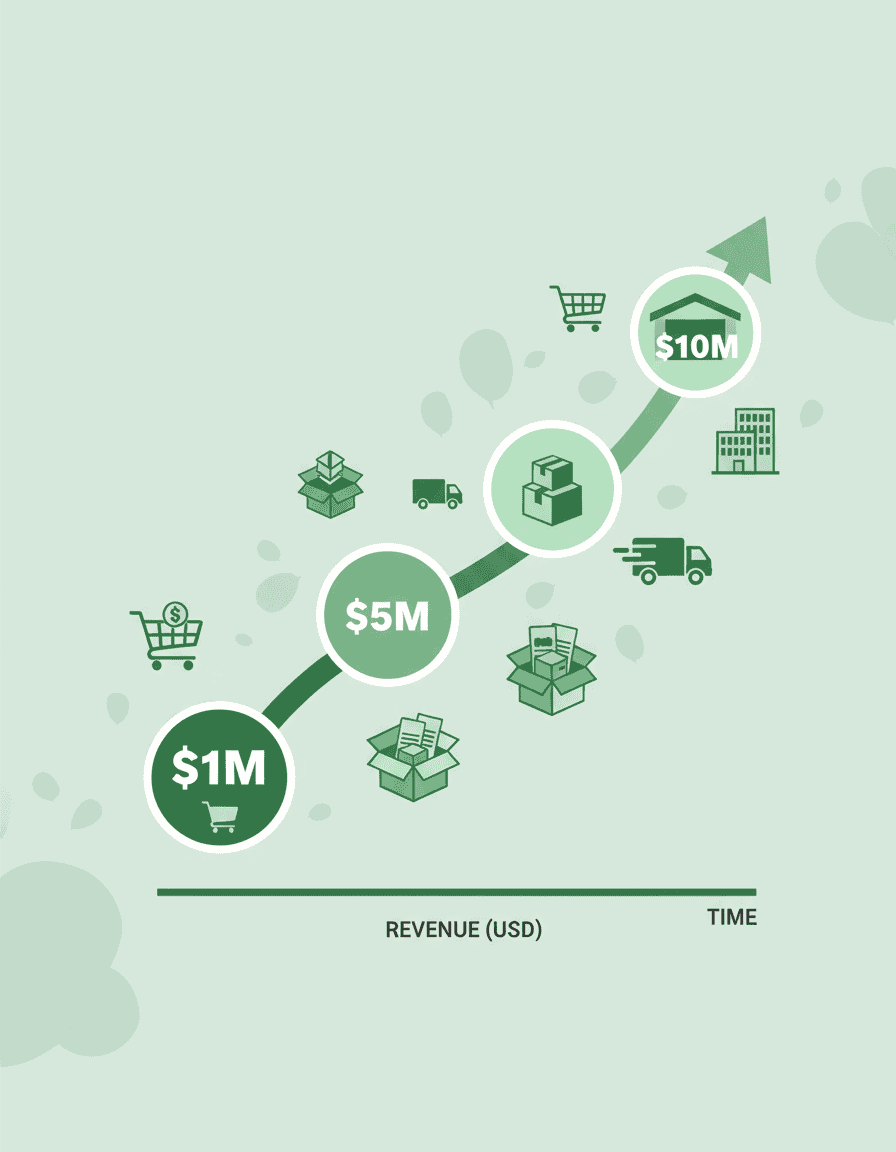
The $1 million annual revenue mark is where things start to change. Up until then, a sharp bookkeeper and clear systems can keep things organized. Once you cross that line, the complexity starts to multiply.
You’re now managing multiple sales channels, warehouses, and advertising budgets. A single bad forecast can create a cash crunch. The systems that worked before suddenly feel inadequate.
Here’s a rough guide to when fractional CFO expertise pays off:
- Between $1M and $5M in annual revenue, you need help with cash flow forecasting, profitability tracking, and financial reporting.
- Between $5M and $10M, fractional CFO support becomes a core growth driver.
- Beyond $10M to $20M, most businesses transition to a full-time CFO.
If your company is growing fast, especially over 50% year-over-year, you’ll want a CFO before problems start showing up in your margins.
2. When Cash Flow Feels Like a Rollercoaster
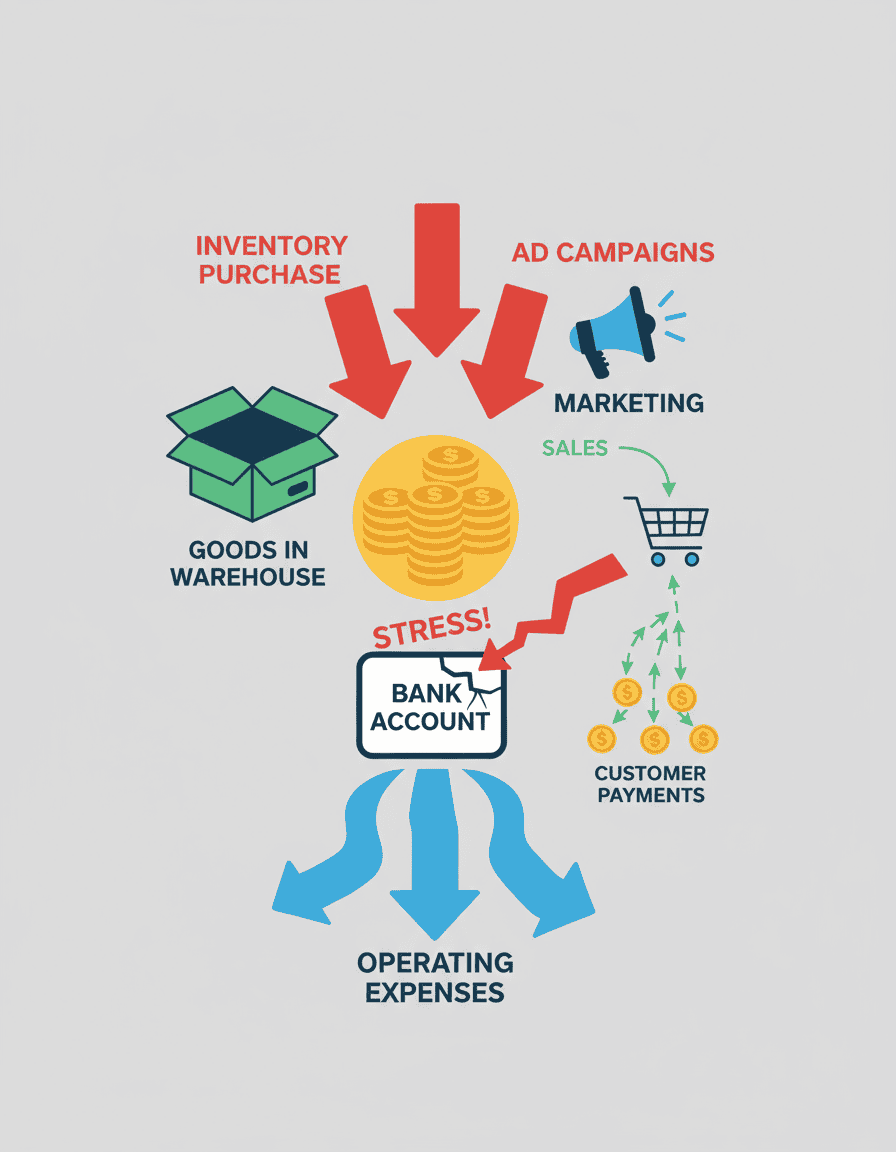
Ecommerce creates a cash flow challenge that catches many founders off guard. You pay for inventory and advertising upfront, but the revenue from those sales doesn’t arrive until weeks later.
If you’ve ever had to delay a payment or juggle multiple cards just to make it through the month, it’s not a sign of failure. It’s a sign that your financial structure hasn’t caught up with your business model.
A fractional CFO builds rolling cash flow forecasts, identifies where money is getting stuck, and designs systems to stabilize your liquidity. That way, you can invest in growth confidently instead of reacting to surprises.
Even profitable companies experience cash shortages when they’re scaling. The right financial strategy prevents those moments from turning into emergencies.
3. When Profits Aren’t Keeping Up with Sales

Revenue is growing but profits are shrinking. That’s one of the most common warning signs that you’ve outgrown basic bookkeeping.
A fractional CFO dives deep into your numbers to uncover where your profits are leaking. They’ll analyze margins by SKU, ad channel, and customer segment to find out what’s really driving (or draining) your bottom line.
Industry benchmarks are a helpful reference:
- 5% net profit is low
- 10% is healthy
- 20% and above is exceptional
If you’re not sure why your margins are slipping, a CFO gives you clarity and a plan to reverse the trend.
4. When Multi-Channel Operations Get Messy
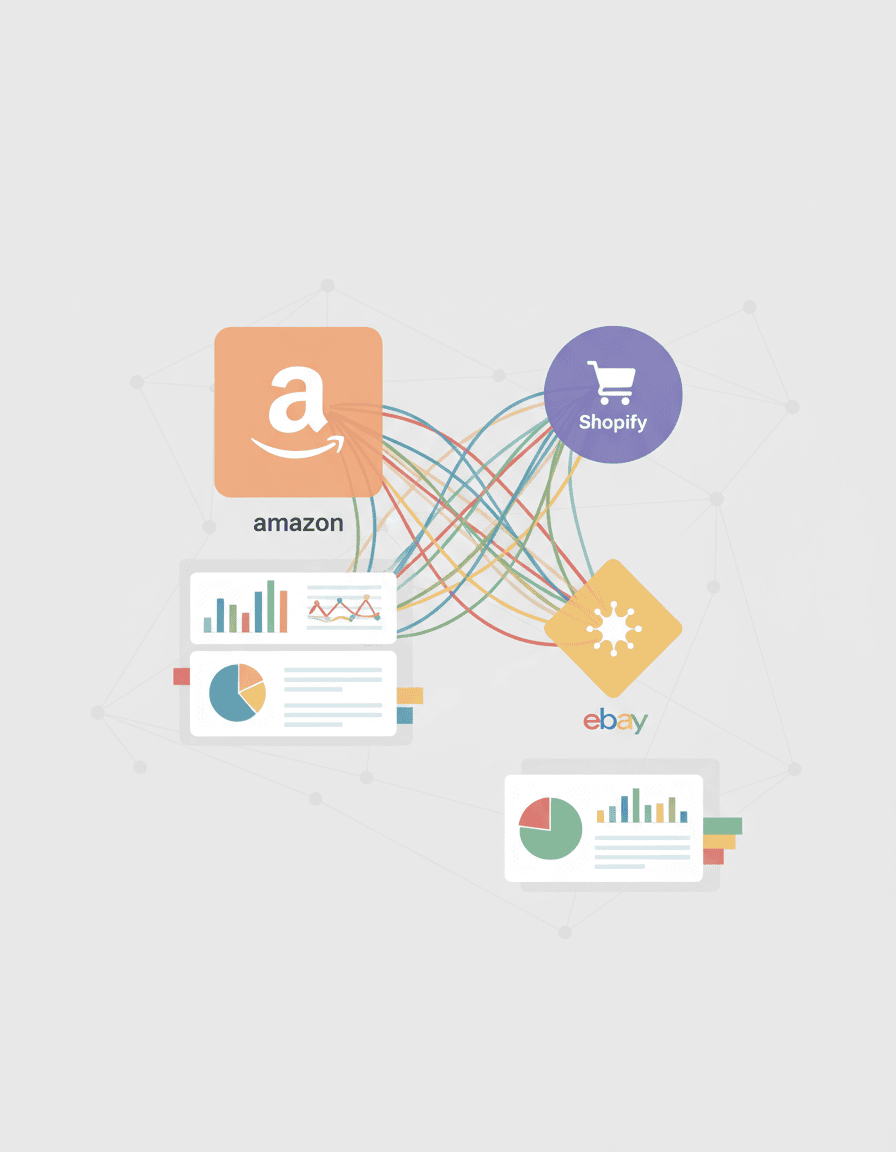
Running a single online store is one thing. Managing multiple channels like Shopify, Amazon, eBay, wholesale partners, or international markets, is something else entirely.
Each platform has its own payout structure, fees, and reporting format. Without centralized systems, you end up piecing data together manually, which makes it almost impossible to see the full picture.
A fractional CFO standardizes financial reporting across every channel, reconciles payouts, tracks profitability, and ensures compliance with multi-state sales tax laws. The result is financial visibility you can actually trust.
5. When You’re Preparing for Funding or an Exit

The right time to bring in a fractional CFO is before you start raising capital or preparing for an exit, not after.
A CFO helps you get your financials investor-ready, builds credible projections, and ensures that your numbers tell the story investors want to see. During exit preparation, they lead due diligence and coordinate across valuation, legal, and financial teams so you’re not caught off guard by questions or surprises.
Poor financial documentation can reduce deal value by 10 to 30 percent. Clean, organized financials can do the opposite—adding meaningful value when it matters most.
6. When Inventory Becomes a Cash Trap
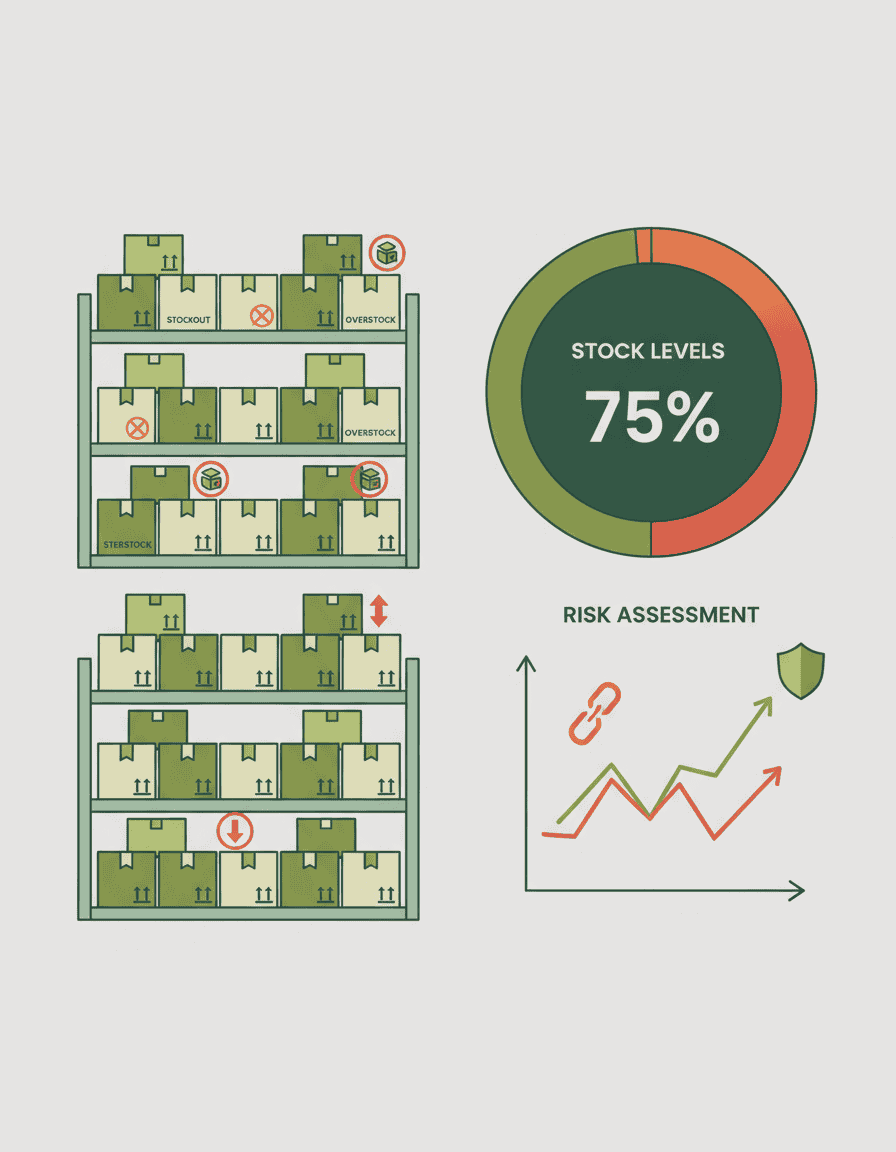
Inventory is often the silent cash drain in ecommerce. Research shows that nearly a quarter of ecommerce businesses lose profit directly because of inventory mismanagement, and more than 40 percent lose revenue to stockouts or overstocking.
A fractional CFO helps you turn inventory into a strategic advantage. They track key metrics like inventory turnover and GMROI (gross margin return on investment) to make sure your stock is working for you, not against you. They also identify where capital is tied up in slow-moving SKUs or poor reorder cycles and build a plan to free it up.
7. When You’re Flying Blind Without Data

If your financial reports are delayed, incomplete, or inconsistent, decision-making becomes guesswork.
A fractional CFO creates real-time dashboards that track profitability, cash flow, and key metrics by product or channel. They also introduce forecasting tools that help you see six to twelve months ahead.
That shift from reactive to proactive is where many founders finally feel in control again.
8. When the Cost of Not Knowing Becomes Too High
Most ecommerce businesses pay between $3,000 and $10,000 per month for fractional CFO services, with the sweet spot around $5,000 to $7,000.
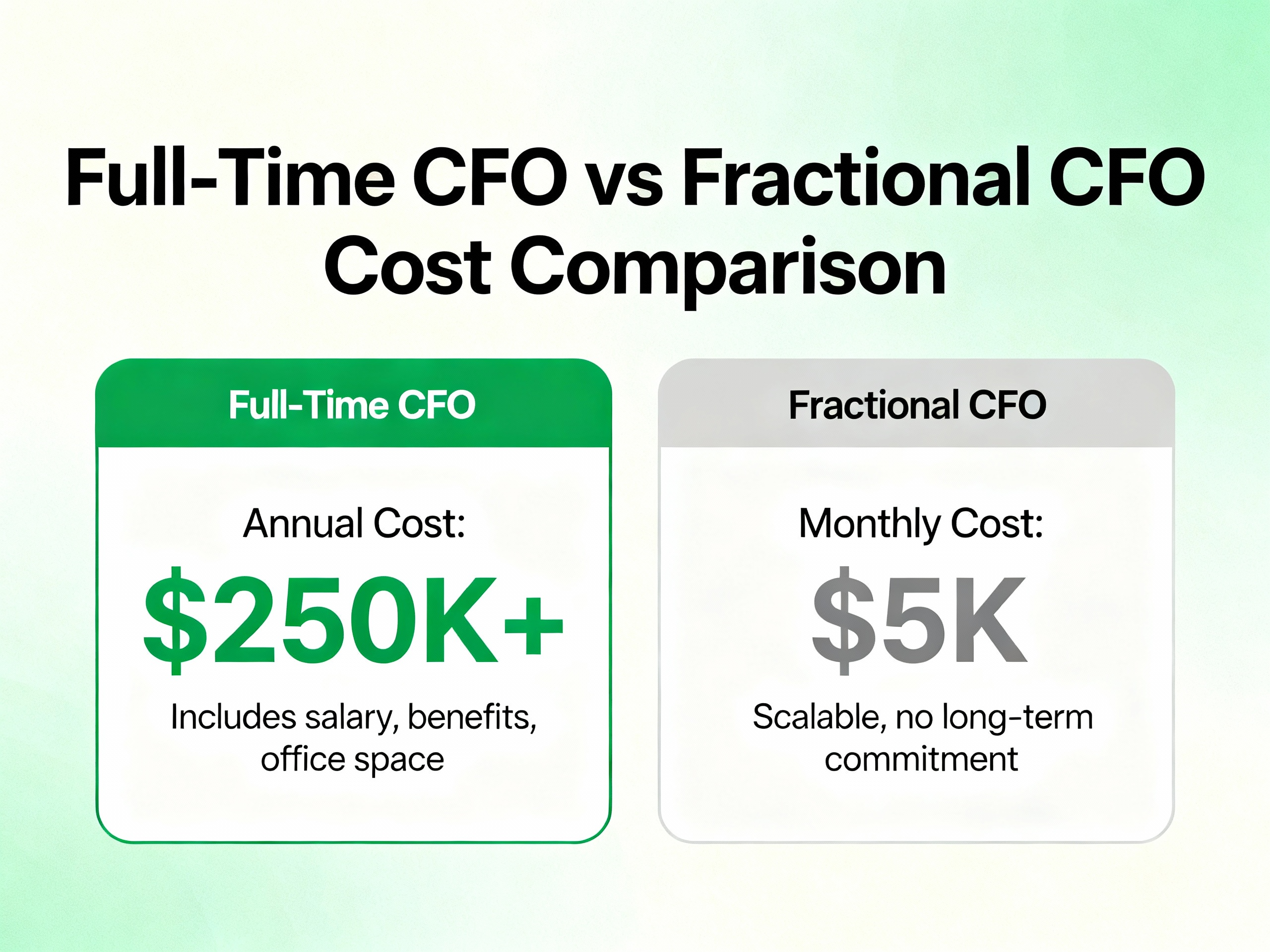
Compared to a full-time CFO salary of $250,000 to $400,000 plus benefits, the savings are substantial. And because fractional arrangements are flexible, you can increase support during key periods, like fundraising or Q4 planning. And scale it back when things stabilize.
The goal isn’t to add another expense. It’s to invest in clarity, control, and confidence as you grow.

The Bottom Line
The right time to hire a fractional CFO isn’t when your financial problems hit a breaking point. It’s when you start to feel the limits of what you can manage on your own.
Here are the most common signs:
- You’ve crossed $1M in annual revenue and operations feel heavier
- Cash flow fluctuates unpredictably
- Margins are slipping despite higher sales
- You’re managing multiple sales channels
- You’re preparing for fundraising or an exit
- You don’t have real-time visibility into your numbers
If two or more of those sound familiar, it’s time to bring in strategic financial help.
An experienced Ecommerce Fractional CFO doesn’t just clean up your books. They help you build a business that’s financially stable, scalable, and ready for whatever comes next.
If you’re starting to feel like your business is outgrowing your financial systems, that’s a good sign—it means you’re scaling. The next step is to make sure your numbers can keep up.
Let’s talk about what that looks like.
Schedule a 30-minute Financial Clarity Call and see how a fractional CFO can help you grow with less stress and more control.
Frequently Asked Questions About Ecommerce Fractional CFO’s
The Mistake: Committing to long-term contracts without testing the relationship and fit first.
Why It’s Costly: Chemistry and communication style matter significantly in advisory relationships. Locking into a year-long contract with the wrong person creates friction and reduces effectiveness.
The Better Approach: Start with a 3-6 month pilot project focused on a specific deliverable—building a cash flow model, conducting margin analysis, or implementing financial dashboards. This allows both parties to assess fit before committing long-term.
The Mistake: Overlooking warning signs like vague answers, inability to provide references, overpromising results without understanding your business, or lack of specific ecommerce examples.
Why It’s Costly: A poor fractional CFO fit wastes months and thousands of dollars before you realize they’re not delivering value. The opportunity cost of delayed strategic improvements compounds the direct expense.
The Better Approach: Conduct thorough interviews using structured questions, check references from similar businesses, ask for specific examples of challenges they’ve solved, and trust your instincts if something feels off.
The Mistake: Assuming fractional CFO services include day-to-day bookkeeping, transaction recording, invoice processing, and reconciliation.
Why It’s Costly: Fractional CFOs charge $150-$300+ per hour. Having them perform bookkeeping tasks that cost $30-$75 per hour is wildly inefficient and wastes their strategic expertise on tactical work.
The Better Approach: Maintain a bookkeeper or accounting team for daily transaction management, then have your fractional CFO analyze that clean data to provide strategic guidance and recommendations.
The Mistake: Treating the fractional CFO as a separate consultant who doesn’t need access to your full team, systems, or operational information.
Why It’s Costly: Financial strategy requires understanding operations, marketing, inventory, and customer behavior. Siloing the fractional CFO from these areas means they’re making recommendations based on incomplete information.
The Better Approach: Introduce your fractional CFO to key team members, grant appropriate system access, and include them in relevant strategic discussions. The best results come from deep integration with your existing operations.
The Mistake: Hiring an individual freelance CFO when your business needs require a broader team with diverse skill sets—everything from technical accounting to FP&A to systems implementation.
Why It’s Costly: Individual fractional CFOs may lack bandwidth during critical periods or have gaps in specialized areas. If they leave, you lose all institutional knowledge and momentum.
The Better Approach: For complex ecommerce businesses with multiple needs, consider fractional CFO firms that provide a team approach—senior CFO leadership plus supporting controllers, analysts, and bookkeepers who can scale services as needed.
The Mistake: Believing a fractional CFO can magically fix all financial problems without requiring any changes to existing systems, processes, or team behaviors.
Why It’s Costly: Real financial improvement requires implementing new systems, changing workflows, and sometimes making uncomfortable decisions about pricing, vendors, or unprofitable products. Resistance to these changes means paying for expertise you won’t implement.
The Better Approach: Recognize that hiring a fractional CFO means committing to process improvements and strategic changes. Be prepared to invest in better tools, adjust operational workflows, and act on their recommendations.
The Mistake: Hiring a fractional CFO without specific objectives, expecting them to “just figure out what we need”.
Why It’s Costly: Without clear direction, you may end up paying for services that don’t align with your immediate priorities. The fractional CFO spends time on activities that aren’t moving the needle on your most pressing challenges.
The Better Approach: Before hiring, identify your top 2-3 financial priorities: improving cash flow forecasting, optimizing margins, preparing for fundraising, implementing better inventory management, etc. Share these goals explicitly during the interview process and establish KPIs to measure progress.
The Mistake: Selecting a fractional CFO based on general finance credentials without verifying they understand ecommerce-specific challenges like multichannel accounting, inventory management, fulfillment costs, marketplace fees, and sales tax complexity.
Why It’s Costly: Ecommerce has unique financial dynamics that traditional retail or service business CFOs may not understand. Without domain expertise, they’ll spend months learning your business model instead of immediately adding value.
The Better Approach: Specifically seek fractional CFOs with proven ecommerce or DTC experience. Ask for case studies from businesses at your revenue stage and in your sales channels (Amazon FBA, Shopify, multichannel, etc.).
The Mistake: Viewing fractional CFO services as an expense to minimize rather than an investment that generates returns.
Why It’s Costly: A $5,000/month fractional CFO who helps you improve gross margins by 3% on a $10M business generates $300,000 in additional annual profit—a 5-6x return on investment. Choosing a cheaper option without ecommerce expertise often leads to missed opportunities worth far more than the cost savings.
The Better Approach: Evaluate fractional CFOs based on relevant experience, specific results they’ve achieved for similar businesses, and projected ROI rather than solely on hourly rates or monthly fees.
The Mistake: Deciding to raise capital or explore an exit, then immediately starting to look for a fractional CFO to help prepare.
Why It’s Costly: Investors and acquirers want to see 12-24 months of clean, organized financials with clear KPIs and growth metrics. Scrambling to get your financial house in order in the final weeks before due diligence makes you look unprepared and can significantly reduce valuations.
The Better Approach: Engage a fractional CFO 6-12 months before anticipated fundraising or exit events. This gives adequate time to clean up financials, implement proper systems, establish KPI tracking, and tell a compelling financial story.
The Mistake: Assuming that because you have a bookkeeper or accountant handling your books, you don’t need a fractional CFO.
Why It’s Costly: Bookkeepers record transactions and maintain accurate records, but they don’t provide forward-looking strategy, cash flow forecasting, margin optimization, or fundraising guidance. You’re leaving strategic growth opportunities on the table.
The Better Approach: Recognize that bookkeepers, accountants, and fractional CFOs serve complementary but distinct roles. Your bookkeeper maintains your financial records; your fractional CFO uses that data to guide strategic decisions and growth initiatives.
The Mistake: Many ecommerce business owners only consider hiring a fractional CFO when they’re already in trouble—cash is running dangerously low, they’ve missed a tax deadline, or they’re scrambling to prepare financials for an investor who’s already interested.
Why It’s Costly: By the time you’re in crisis mode, your options are limited and more expensive. You may have already lost opportunities, damaged vendor relationships, or made poor decisions based on incomplete financial data.
The Better Approach: Bring in a fractional CFO when you see early warning signs—margins declining slightly, cash flow becoming less predictable, or complexity increasing as you add channels. Proactive engagement prevents crises rather than managing them.
CFO (Chief Financial Officer):
- Sets overall financial direction and strategy
- Interfaces with board, investors, and external stakeholders
- Makes high-level strategic decisions on capital structure, M&A, growth initiatives
VP of Finance:
- Executes CFO’s strategic vision
- Manages financial planning & analysis (FP&A) functions
- Deep accounting background with leadership skills
- Often promoted into CFO role
Controller:
- Manages day-to-day accounting operations
- Ensures financial accuracy and compliance
- Oversees accounts payable/receivable, payroll, general ledger
- Produces financial statements and reports
Monthly retainer ranges:
- Entry-level services: $1,500-3,000/month (businesses under $5M revenue)
- Mid-tier services: $3,000-6,000/month (businesses $5M-20M revenue)
- Premium services: $6,000-12,000/month (businesses above $20M)
Typical arrangement: Most ecommerce businesses pay $5,000-7,000 monthly for 10-40 hours of service
Comparison to full-time:
- Full-time CFO: $250,000-$500,000 annually plus benefits, recruitment costs ($50,000-75,000), onboarding time
- Fractional CFO: 60-80% cost savings with immediate expertise and no recruitment costs
Yes, fractional CFOs are designed to complement your existing team, not replace them. They collaborate with bookkeepers and accountants to ensure financial systems, reporting, and compliance are aligned.
Integration benefits:
- Fractional CFO provides strategic direction while bookkeeper handles daily transactions
- Better data accuracy since CFO has direct access to ask questions and provide training
- Integrated view enables strategic decisions that consider both long-term goals and day-to-day operations
- Both functions work toward the same business objectives
Many fractional CFO firms also have controllers and bookkeepers on staff to support implementation.
Days 1-30 (Discovery Phase):
- Comprehensive financial assessment and business model review
- Understanding revenue models, CAC, profit margins, cash flow patterns
- Identifying biggest financial challenges and quick wins
- Meeting with key stakeholders and existing finance team
Days 31-60 (Strategy Development):
- Developing financial strategies and implementation roadmap
- Setting up KPI dashboards and reporting frameworks
- Identifying cost-saving opportunities and margin improvement areas
- Creating cash flow forecasting models
Days 61-90 (Execution & Optimization):
- Implementing strategic initiatives and process improvements
- Delivering measurable results on early wins
- Establishing regular reporting cadence
- Fine-tuning financial systems and controls
Project-based: 3-6 months for specific initiatives like fundraising, system implementation, or turnarounds
Ongoing strategic support: Can last 6 months to several years, often 12-24 months on average
Transition planning: Many businesses work with fractional CFOs until they’re ready to hire full-time, typically when crossing $30-50M in revenue
Education:
- Bachelor’s degree in finance or accounting (minimum requirement)
- Master’s degree in finance, accounting, or MBA (preferred)
Professional certifications:
- CPA (Certified Public Accountant): Gold standard for financial reporting, taxation, and audit expertise
- CMA (Certified Management Accountant): Strategic financial management and performance optimization focus
- CFA (Chartered Financial Analyst): Investment expertise, valuation modeling, capital raising
- FCFO (Fractional CFO Certification): Specialized training in fractional executive leadership
Experience requirements:
- Minimum 8-15 years in senior finance roles (CFO, VP Finance, Finance Director)
- Prior CFO or VP-level experience (not just controller or accounting manager)
- Proven track record with companies in your revenue range
Essential questions:
- What experience do you have with ecommerce businesses at my revenue stage?
- Can you provide 2-3 case studies from similar ecommerce companies you’ve helped?
- What will you do in your first 30-60-90 days with my business?
- How do you measure success in your role?
- What tools and financial systems are you proficient with?
- How do you communicate with clients and what’s your typical response time?
- How many clients do you currently serve and how will you ensure adequate availability?
- What is your pricing model (hourly, retainer, project-based)?
- Can you provide references from ecommerce clients I can speak with?
Red flags to watch for:
- Overpromising massive improvements without understanding your business
- Too much focus on historical data rather than forward-looking strategy
- Vague communication or lack of clear explanations
- No relevant ecommerce or DTC experience
- Inability to provide specific examples of past successes
- Inflexible service models that don’t adapt to your changing needs
Typical ROI metrics:
- 3-5x return on investment within the first year
- 2-4% gross margin improvement within 6-9 months
- 15-25% reduction in cash conversion cycle within 3-6 months
- 20-30% inventory turnover improvement within 6-12 months
- 15-25% increase in return on ad spend within 3-6 months
Value creation areas:
- Payment processing savings: A $5M business saving 1% on processing fees recovers $50,000 annually—covering 6-8 months of fractional CFO fees
- Margin optimization: 3% gross margin improvement on $10M revenue = $300,000 additional annual profit (4-6x ROI)
Address this critical decision point:
Stay with Fractional CFO when:
- Annual revenue is under $30-50 million
- Financial needs are cyclical or project-based
- You’re still establishing financial systems and processes
- Cost efficiency is a priority (fractional CFO costs 60-80% less)
Transition to Full-Time CFO when:
- Annual revenue exceeds $30-50 million
- Financial complexity requires daily oversight
- You’re preparing for IPO or major M&A transactions
- Investor/stakeholder demands require continuous strategic reporting
- Multiple revenue streams and international operations need dedicated leadership
This is one of the most searched comparisons. Add a clear breakdown:
- Bookkeeper: Handles day-to-day transaction recording, reconciliation, and basic financial reports
- Accountant: Prepares financial statements, files tax returns, ensures compliance, and provides tax planning
- Controller: Manages accounting operations, oversees financial reporting accuracy, implements internal controls, and ensures compliance. Focuses on historical data and tactical execution
- Fractional CFO: Provides strategic financial leadership, forward-looking planning, cash flow forecasting, fundraising support, and high-level decision guidance. Uses the data from the other roles to drive strategy
Key point to emphasize: Many ecommerce businesses benefit from having both a bookkeeper/controller handling daily operations AND a fractional CFO providing strategic oversight.
Take Control of Your Finances Today!
Whether you’re a Reseller (Wholesale, Retail Arbitrage, Online Arbitrage, Dropshipping) or a Brand Owner, managing finances is key to your success. We support eCommerce businesses across major platforms like Amazon, Shopify, eBay, Walmart, Etsy, BigCommerce, and beyond.
See if you qualify for a free strategy session with our team to learn how Tall Oak Advisors can streamline your bookkeeping and ensure accurate tax preparation for your business.
Need a quick quote?
Or explore our range of free resources crafted specifically for eCommerce sellers:
- Business Tax Worksheet
- Frequently Asked Questions About Taxes and Bookkeeping
- Tax Write-Offs Every Amazon and Shopify Seller Should Know
Take the first step toward a stronger financial future and position your business for long-term success.
Knowing when to bring in a fractional CFO isn’t about reaching a certain revenue milestone. It’s about recognizing when your business has become too complex to manage without strategic financial leadership.
For ecommerce founders, that tipping point often arrives quietly. One day you realize cash flow feels unpredictable, inventory decisions are getting harder to make, and you’re not sure whether growth is helping or hurting your bottom line. That’s usually the signal it’s time to bring in an Ecommerce Fractional CFO.
1. When Growth Outpaces Simplicity
The $1 million annual revenue mark is where things start to change. Up until then, a sharp bookkeeper and clear systems can keep things organized. Once you cross that line, the complexity starts to multiply.
You’re now managing multiple sales channels, warehouses, and advertising budgets. A single bad forecast can create a cash crunch. The systems that worked before suddenly feel inadequate.
Here’s a rough guide to when fractional CFO expertise pays off:
- Between $1M and $5M in annual revenue, you need help with cash flow forecasting, profitability tracking, and financial reporting.
- Between $5M and $10M, fractional CFO support becomes a core growth driver.
- Beyond $10M to $20M, most businesses transition to a full-time CFO.
If your company is growing fast, especially over 50% year-over-year, you’ll want a CFO before problems start showing up in your margins.
2. When Cash Flow Feels Like a Rollercoaster
Ecommerce creates a cash flow challenge that catches many founders off guard. You pay for inventory and advertising upfront, but the revenue from those sales doesn’t arrive until weeks later.
If you’ve ever had to delay a payment or juggle multiple cards just to make it through the month, it’s not a sign of failure. It’s a sign that your financial structure hasn’t caught up with your business model.
A fractional CFO builds rolling cash flow forecasts, identifies where money is getting stuck, and designs systems to stabilize your liquidity. That way, you can invest in growth confidently instead of reacting to surprises.
Even profitable companies experience cash shortages when they’re scaling. The right financial strategy prevents those moments from turning into emergencies.
3. When Profits Aren’t Keeping Up with Sales
Revenue is growing but profits are shrinking. That’s one of the most common warning signs that you’ve outgrown basic bookkeeping.
A fractional CFO dives deep into your numbers to uncover where your profits are leaking. They’ll analyze margins by SKU, ad channel, and customer segment to find out what’s really driving (or draining) your bottom line.
Industry benchmarks are a helpful reference:
- 5% net profit is low
- 10% is healthy
- 20% and above is exceptional
If you’re not sure why your margins are slipping, a CFO gives you clarity and a plan to reverse the trend.
4. When Multi-Channel Operations Get Messy
Running a single online store is one thing. Managing multiple channels like Shopify, Amazon, eBay, wholesale partners, or international markets, is something else entirely.
Each platform has its own payout structure, fees, and reporting format. Without centralized systems, you end up piecing data together manually, which makes it almost impossible to see the full picture.
A fractional CFO standardizes financial reporting across every channel, reconciles payouts, tracks profitability, and ensures compliance with multi-state sales tax laws. The result is financial visibility you can actually trust.
5. When You’re Preparing for Funding or an Exit
The right time to bring in a fractional CFO is before you start raising capital or preparing for an exit, not after.
A CFO helps you get your financials investor-ready, builds credible projections, and ensures that your numbers tell the story investors want to see. During exit preparation, they lead due diligence and coordinate across valuation, legal, and financial teams so you’re not caught off guard by questions or surprises.
Poor financial documentation can reduce deal value by 10 to 30 percent. Clean, organized financials can do the opposite—adding meaningful value when it matters most.
6. When Inventory Becomes a Cash Trap
Inventory is often the silent cash drain in ecommerce. Research shows that nearly a quarter of ecommerce businesses lose profit directly because of inventory mismanagement, and more than 40 percent lose revenue to stockouts or overstocking.
A fractional CFO helps you turn inventory into a strategic advantage. They track key metrics like inventory turnover and GMROI (gross margin return on investment) to make sure your stock is working for you, not against you. They also identify where capital is tied up in slow-moving SKUs or poor reorder cycles and build a plan to free it up.
7. When You’re Flying Blind Without Data
If your financial reports are delayed, incomplete, or inconsistent, decision-making becomes guesswork.
A fractional CFO creates real-time dashboards that track profitability, cash flow, and key metrics by product or channel. They also introduce forecasting tools that help you see six to twelve months ahead.
That shift from reactive to proactive is where many founders finally feel in control again.
8. When the Cost of Not Knowing Becomes Too High
Most ecommerce businesses pay between $3,000 and $10,000 per month for fractional CFO services, with the sweet spot around $5,000 to $7,000.
Compared to a full-time CFO salary of $250,000 to $400,000 plus benefits, the savings are substantial. And because fractional arrangements are flexible, you can increase support during key periods, like fundraising or Q4 planning. And scale it back when things stabilize.
The goal isn’t to add another expense. It’s to invest in clarity, control, and confidence as you grow.
The Bottom Line
The right time to hire a fractional CFO isn’t when your financial problems hit a breaking point. It’s when you start to feel the limits of what you can manage on your own.
Here are the most common signs:
- You’ve crossed $1M in annual revenue and operations feel heavier
- Cash flow fluctuates unpredictably
- Margins are slipping despite higher sales
- You’re managing multiple sales channels
- You’re preparing for fundraising or an exit
- You don’t have real-time visibility into your numbers
If two or more of those sound familiar, it’s time to bring in strategic financial help.
An experienced Ecommerce Fractional CFO doesn’t just clean up your books. They help you build a business that’s financially stable, scalable, and ready for whatever comes next.
If you’re starting to feel like your business is outgrowing your financial systems, that’s a good sign—it means you’re scaling. The next step is to make sure your numbers can keep up.
Let’s talk about what that looks like.
Schedule a 30-minute Financial Clarity Call and see how a fractional CFO can help you grow with less stress and more control.
Frequently Asked Questions About Ecommerce Fractional CFO’s
The Mistake: Committing to long-term contracts without testing the relationship and fit first.
Why It’s Costly: Chemistry and communication style matter significantly in advisory relationships. Locking into a year-long contract with the wrong person creates friction and reduces effectiveness.
The Better Approach: Start with a 3-6 month pilot project focused on a specific deliverable—building a cash flow model, conducting margin analysis, or implementing financial dashboards. This allows both parties to assess fit before committing long-term.
The Mistake: Overlooking warning signs like vague answers, inability to provide references, overpromising results without understanding your business, or lack of specific ecommerce examples.
Why It’s Costly: A poor fractional CFO fit wastes months and thousands of dollars before you realize they’re not delivering value. The opportunity cost of delayed strategic improvements compounds the direct expense.
The Better Approach: Conduct thorough interviews using structured questions, check references from similar businesses, ask for specific examples of challenges they’ve solved, and trust your instincts if something feels off.
The Mistake: Assuming fractional CFO services include day-to-day bookkeeping, transaction recording, invoice processing, and reconciliation.
Why It’s Costly: Fractional CFOs charge $150-$300+ per hour. Having them perform bookkeeping tasks that cost $30-$75 per hour is wildly inefficient and wastes their strategic expertise on tactical work.
The Better Approach: Maintain a bookkeeper or accounting team for daily transaction management, then have your fractional CFO analyze that clean data to provide strategic guidance and recommendations.
The Mistake: Treating the fractional CFO as a separate consultant who doesn’t need access to your full team, systems, or operational information.
Why It’s Costly: Financial strategy requires understanding operations, marketing, inventory, and customer behavior. Siloing the fractional CFO from these areas means they’re making recommendations based on incomplete information.
The Better Approach: Introduce your fractional CFO to key team members, grant appropriate system access, and include them in relevant strategic discussions. The best results come from deep integration with your existing operations.
The Mistake: Hiring an individual freelance CFO when your business needs require a broader team with diverse skill sets—everything from technical accounting to FP&A to systems implementation.
Why It’s Costly: Individual fractional CFOs may lack bandwidth during critical periods or have gaps in specialized areas. If they leave, you lose all institutional knowledge and momentum.
The Better Approach: For complex ecommerce businesses with multiple needs, consider fractional CFO firms that provide a team approach—senior CFO leadership plus supporting controllers, analysts, and bookkeepers who can scale services as needed.
The Mistake: Believing a fractional CFO can magically fix all financial problems without requiring any changes to existing systems, processes, or team behaviors.
Why It’s Costly: Real financial improvement requires implementing new systems, changing workflows, and sometimes making uncomfortable decisions about pricing, vendors, or unprofitable products. Resistance to these changes means paying for expertise you won’t implement.
The Better Approach: Recognize that hiring a fractional CFO means committing to process improvements and strategic changes. Be prepared to invest in better tools, adjust operational workflows, and act on their recommendations.
The Mistake: Hiring a fractional CFO without specific objectives, expecting them to “just figure out what we need”.
Why It’s Costly: Without clear direction, you may end up paying for services that don’t align with your immediate priorities. The fractional CFO spends time on activities that aren’t moving the needle on your most pressing challenges.
The Better Approach: Before hiring, identify your top 2-3 financial priorities: improving cash flow forecasting, optimizing margins, preparing for fundraising, implementing better inventory management, etc. Share these goals explicitly during the interview process and establish KPIs to measure progress.
The Mistake: Selecting a fractional CFO based on general finance credentials without verifying they understand ecommerce-specific challenges like multichannel accounting, inventory management, fulfillment costs, marketplace fees, and sales tax complexity.
Why It’s Costly: Ecommerce has unique financial dynamics that traditional retail or service business CFOs may not understand. Without domain expertise, they’ll spend months learning your business model instead of immediately adding value.
The Better Approach: Specifically seek fractional CFOs with proven ecommerce or DTC experience. Ask for case studies from businesses at your revenue stage and in your sales channels (Amazon FBA, Shopify, multichannel, etc.).
The Mistake: Viewing fractional CFO services as an expense to minimize rather than an investment that generates returns.
Why It’s Costly: A $5,000/month fractional CFO who helps you improve gross margins by 3% on a $10M business generates $300,000 in additional annual profit—a 5-6x return on investment. Choosing a cheaper option without ecommerce expertise often leads to missed opportunities worth far more than the cost savings.
The Better Approach: Evaluate fractional CFOs based on relevant experience, specific results they’ve achieved for similar businesses, and projected ROI rather than solely on hourly rates or monthly fees.
The Mistake: Deciding to raise capital or explore an exit, then immediately starting to look for a fractional CFO to help prepare.
Why It’s Costly: Investors and acquirers want to see 12-24 months of clean, organized financials with clear KPIs and growth metrics. Scrambling to get your financial house in order in the final weeks before due diligence makes you look unprepared and can significantly reduce valuations.
The Better Approach: Engage a fractional CFO 6-12 months before anticipated fundraising or exit events. This gives adequate time to clean up financials, implement proper systems, establish KPI tracking, and tell a compelling financial story.
The Mistake: Assuming that because you have a bookkeeper or accountant handling your books, you don’t need a fractional CFO.
Why It’s Costly: Bookkeepers record transactions and maintain accurate records, but they don’t provide forward-looking strategy, cash flow forecasting, margin optimization, or fundraising guidance. You’re leaving strategic growth opportunities on the table.
The Better Approach: Recognize that bookkeepers, accountants, and fractional CFOs serve complementary but distinct roles. Your bookkeeper maintains your financial records; your fractional CFO uses that data to guide strategic decisions and growth initiatives.
The Mistake: Many ecommerce business owners only consider hiring a fractional CFO when they’re already in trouble—cash is running dangerously low, they’ve missed a tax deadline, or they’re scrambling to prepare financials for an investor who’s already interested.
Why It’s Costly: By the time you’re in crisis mode, your options are limited and more expensive. You may have already lost opportunities, damaged vendor relationships, or made poor decisions based on incomplete financial data.
The Better Approach: Bring in a fractional CFO when you see early warning signs—margins declining slightly, cash flow becoming less predictable, or complexity increasing as you add channels. Proactive engagement prevents crises rather than managing them.
CFO (Chief Financial Officer):
- Sets overall financial direction and strategy
- Interfaces with board, investors, and external stakeholders
- Makes high-level strategic decisions on capital structure, M&A, growth initiatives
VP of Finance:
- Executes CFO’s strategic vision
- Manages financial planning & analysis (FP&A) functions
- Deep accounting background with leadership skills
- Often promoted into CFO role
Controller:
- Manages day-to-day accounting operations
- Ensures financial accuracy and compliance
- Oversees accounts payable/receivable, payroll, general ledger
- Produces financial statements and reports
Monthly retainer ranges:
- Entry-level services: $1,500-3,000/month (businesses under $5M revenue)
- Mid-tier services: $3,000-6,000/month (businesses $5M-20M revenue)
- Premium services: $6,000-12,000/month (businesses above $20M)
Typical arrangement: Most ecommerce businesses pay $5,000-7,000 monthly for 10-40 hours of service
Comparison to full-time:
- Full-time CFO: $250,000-$500,000 annually plus benefits, recruitment costs ($50,000-75,000), onboarding time
- Fractional CFO: 60-80% cost savings with immediate expertise and no recruitment costs
Yes, fractional CFOs are designed to complement your existing team, not replace them. They collaborate with bookkeepers and accountants to ensure financial systems, reporting, and compliance are aligned.
Integration benefits:
- Fractional CFO provides strategic direction while bookkeeper handles daily transactions
- Better data accuracy since CFO has direct access to ask questions and provide training
- Integrated view enables strategic decisions that consider both long-term goals and day-to-day operations
- Both functions work toward the same business objectives
Many fractional CFO firms also have controllers and bookkeepers on staff to support implementation.
Days 1-30 (Discovery Phase):
- Comprehensive financial assessment and business model review
- Understanding revenue models, CAC, profit margins, cash flow patterns
- Identifying biggest financial challenges and quick wins
- Meeting with key stakeholders and existing finance team
Days 31-60 (Strategy Development):
- Developing financial strategies and implementation roadmap
- Setting up KPI dashboards and reporting frameworks
- Identifying cost-saving opportunities and margin improvement areas
- Creating cash flow forecasting models
Days 61-90 (Execution & Optimization):
- Implementing strategic initiatives and process improvements
- Delivering measurable results on early wins
- Establishing regular reporting cadence
- Fine-tuning financial systems and controls
Project-based: 3-6 months for specific initiatives like fundraising, system implementation, or turnarounds
Ongoing strategic support: Can last 6 months to several years, often 12-24 months on average
Transition planning: Many businesses work with fractional CFOs until they’re ready to hire full-time, typically when crossing $30-50M in revenue
Education:
- Bachelor’s degree in finance or accounting (minimum requirement)
- Master’s degree in finance, accounting, or MBA (preferred)
Professional certifications:
- CPA (Certified Public Accountant): Gold standard for financial reporting, taxation, and audit expertise
- CMA (Certified Management Accountant): Strategic financial management and performance optimization focus
- CFA (Chartered Financial Analyst): Investment expertise, valuation modeling, capital raising
- FCFO (Fractional CFO Certification): Specialized training in fractional executive leadership
Experience requirements:
- Minimum 8-15 years in senior finance roles (CFO, VP Finance, Finance Director)
- Prior CFO or VP-level experience (not just controller or accounting manager)
- Proven track record with companies in your revenue range
Essential questions:
- What experience do you have with ecommerce businesses at my revenue stage?
- Can you provide 2-3 case studies from similar ecommerce companies you’ve helped?
- What will you do in your first 30-60-90 days with my business?
- How do you measure success in your role?
- What tools and financial systems are you proficient with?
- How do you communicate with clients and what’s your typical response time?
- How many clients do you currently serve and how will you ensure adequate availability?
- What is your pricing model (hourly, retainer, project-based)?
- Can you provide references from ecommerce clients I can speak with?
Red flags to watch for:
- Overpromising massive improvements without understanding your business
- Too much focus on historical data rather than forward-looking strategy
- Vague communication or lack of clear explanations
- No relevant ecommerce or DTC experience
- Inability to provide specific examples of past successes
- Inflexible service models that don’t adapt to your changing needs
Typical ROI metrics:
- 3-5x return on investment within the first year
- 2-4% gross margin improvement within 6-9 months
- 15-25% reduction in cash conversion cycle within 3-6 months
- 20-30% inventory turnover improvement within 6-12 months
- 15-25% increase in return on ad spend within 3-6 months
Value creation areas:
- Payment processing savings: A $5M business saving 1% on processing fees recovers $50,000 annually—covering 6-8 months of fractional CFO fees
- Margin optimization: 3% gross margin improvement on $10M revenue = $300,000 additional annual profit (4-6x ROI)
Address this critical decision point:
Stay with Fractional CFO when:
- Annual revenue is under $30-50 million
- Financial needs are cyclical or project-based
- You’re still establishing financial systems and processes
- Cost efficiency is a priority (fractional CFO costs 60-80% less)
Transition to Full-Time CFO when:
- Annual revenue exceeds $30-50 million
- Financial complexity requires daily oversight
- You’re preparing for IPO or major M&A transactions
- Investor/stakeholder demands require continuous strategic reporting
- Multiple revenue streams and international operations need dedicated leadership
This is one of the most searched comparisons. Add a clear breakdown:
- Bookkeeper: Handles day-to-day transaction recording, reconciliation, and basic financial reports
- Accountant: Prepares financial statements, files tax returns, ensures compliance, and provides tax planning
- Controller: Manages accounting operations, oversees financial reporting accuracy, implements internal controls, and ensures compliance. Focuses on historical data and tactical execution
- Fractional CFO: Provides strategic financial leadership, forward-looking planning, cash flow forecasting, fundraising support, and high-level decision guidance. Uses the data from the other roles to drive strategy
Key point to emphasize: Many ecommerce businesses benefit from having both a bookkeeper/controller handling daily operations AND a fractional CFO providing strategic oversight.
Take Control of Your Finances Today!
Whether you’re a Reseller (Wholesale, Retail Arbitrage, Online Arbitrage, Dropshipping) or a Brand Owner, managing finances is key to your success. We support eCommerce businesses across major platforms like Amazon, Shopify, eBay, Walmart, Etsy, BigCommerce, and beyond.
See if you qualify for a free strategy session with our team to learn how Tall Oak Advisors can streamline your bookkeeping and ensure accurate tax preparation for your business.
Need a quick quote?
Or explore our range of free resources crafted specifically for eCommerce sellers:
- 7 Profit Crushing Mistakes That Will Destroy Your eCommerce Business
- Business Tax Worksheet
- Frequently Asked Questions About Taxes and Bookkeeping
- Tax Write-Offs Every Amazon and Shopify Seller Should Know
Take the first step toward a stronger financial future and position your business for long-term success.