


From hidden FBA fees to overlooked home office write-offs, these 11 deductions could mean the difference between profit and loss in 2025.
key points
Running an Amazon business is exciting — watching sales roll in feels amazing. But tax season? That’s when many sellers feel stressed, confused, and worried about overpaying.
The truth is: most Amazon sellers miss thousands of dollars in Amazon seller tax deductions every year simply because they don’t know what they can write off.
This guide breaks down every legitimate seller tax deduction Amazon businesses should know. You’ll see real-world examples, explained in plain English, and learn exactly how to keep more of what you earn.
Table of Contents
How Amazon Seller Tax Deductions Work
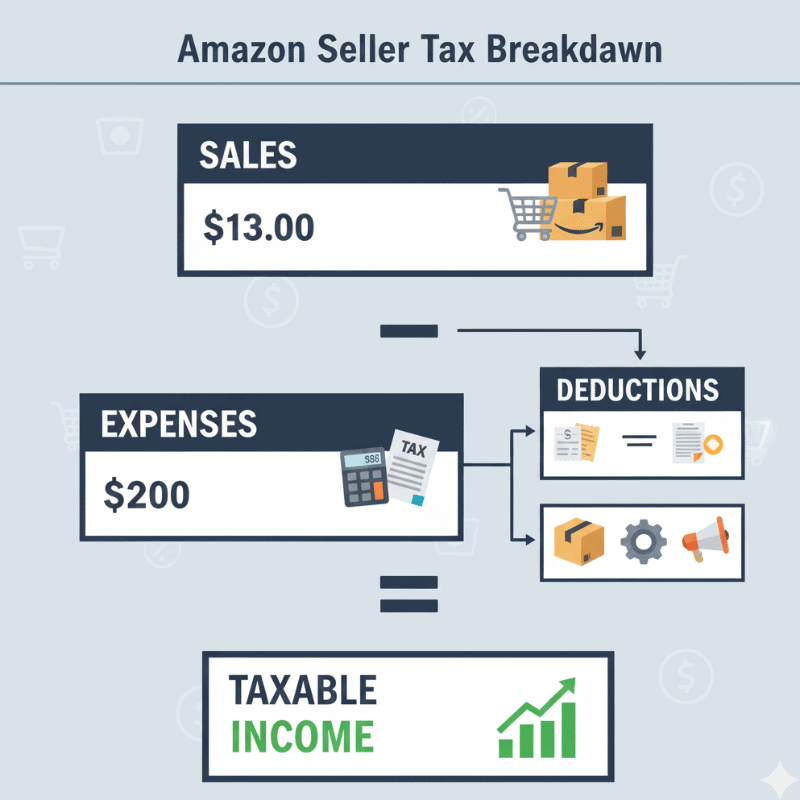
When you sell on Amazon, you bring in sales revenue. But the IRS only taxes your profit (sales minus expenses). Deductions are the legal way to subtract business costs from your income so you only pay tax on what you truly earned.
👉 What this means for you: Every dollar you deduct lowers the amount of income the IRS can tax. If you’re in the 25% tax bracket, a missed $1,000 deduction = $250 in extra taxes you didn’t need to pay.
Essential Seller Tax Deductions Every Amazon Business Should Know
Cost of Goods Sold (COGS) – The #1 Amazon Seller Tax Deduction
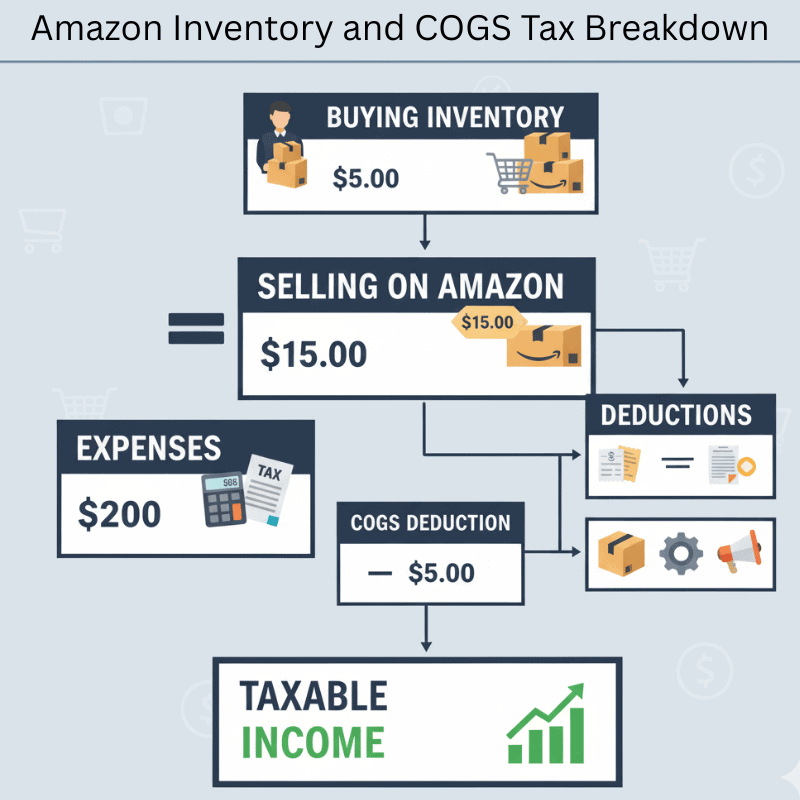
This is your biggest deduction — the money you spend to get products ready for sale.
What counts:
- The price you paid your supplier or manufacturer.
- Freight or shipping to bring inventory into Amazon FBA.
- Packaging included with the product if you are manufacturing your own product.
👉 Example: If you buy an item for $5 and sell it for $15, you don’t pay tax on the full $15. You deduct the $5 (plus shipping/packaging). If you miss this, you’ll overstate your profit — and overpay taxes.
Amazon Fees and Subscription Costs
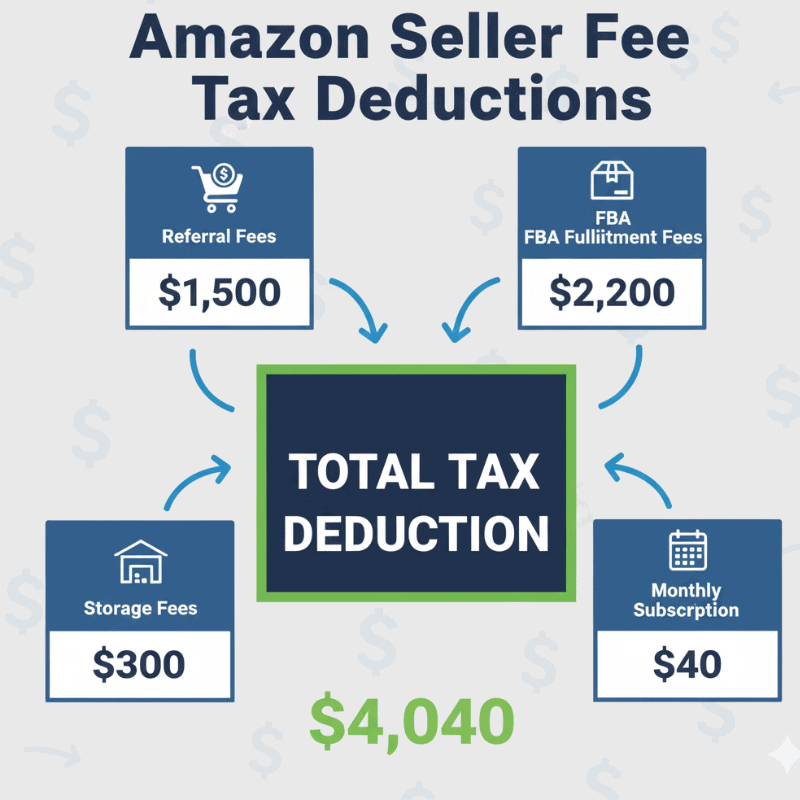
Amazon takes a cut at every step. The IRS allows you to deduct all of them.
What counts:
- Referral fees (Amazon’s % cut of each sale).
- FBA fulfillment fees (pick, pack, ship).
- Storage fees at Amazon warehouses.
- Monthly Pro Seller subscription fee ($39.99).
👉 What this means for you: These fees usually get pulled out before Amazon pays you. If you don’t track them, you’ll think you made more than you did — and the IRS will happily tax you on money you never saw.
Shipping & Packaging Supplies Write-Offs
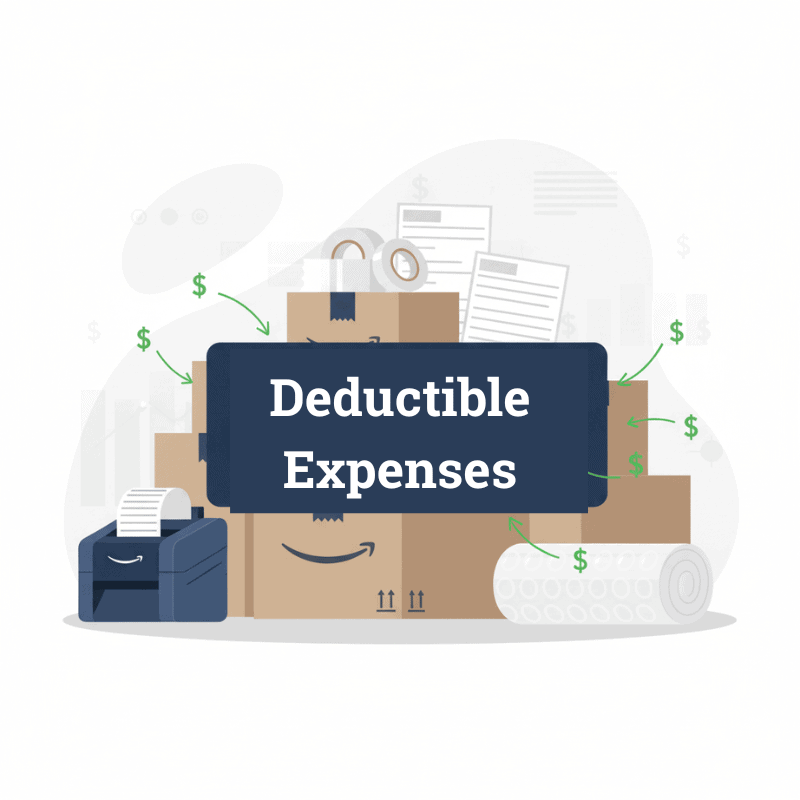
Even if Amazon ships orders, you pay to prep and send inventory in. Don’t forget these smaller costs.
What counts:
- Boxes, tape, poly mailers, bubble wrap.
- Labels and printer ink.
- UPS/FedEx/USPS bills for shipments to Amazon.
- Box cutters
- Label Printers
👉 Small costs add up fast. $30/month in tape and labels = $360/year. Add UPS bills, and you could be missing thousands in write-offs.
And you can be capturing another $1500 if you get a good thermal label printer if you’re doing your own prep.
We recommend the Zebra ZT411 Thermal Label Printer. This bad boy can print off thousands of labels a day, and it’s so easy to use. Detailed write-up coming soon. Labeling your own products can save you thousands of dollars on prep fees.
Software & Tools for Amazon Sellers
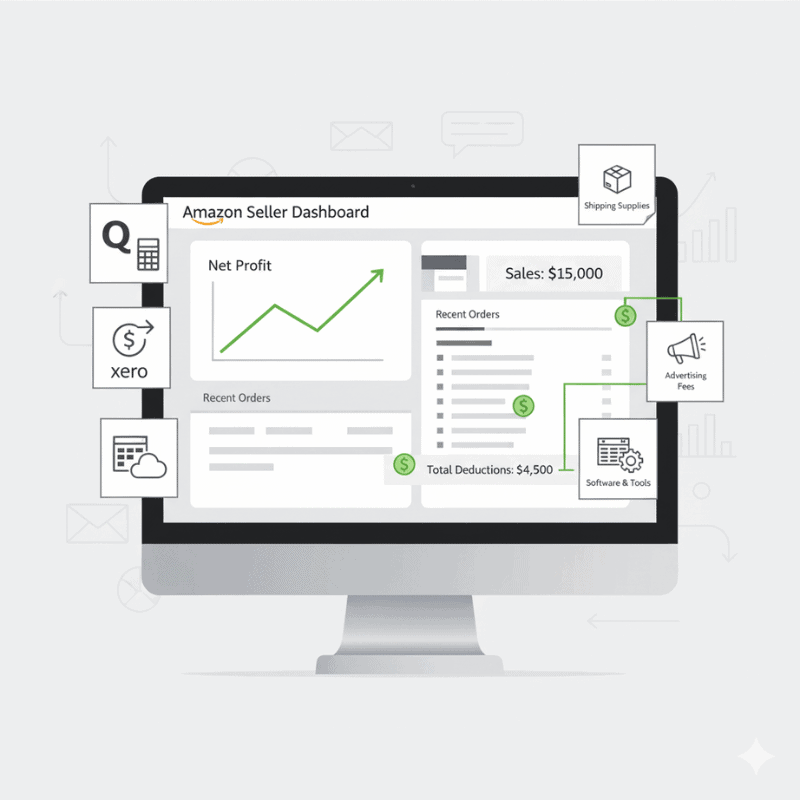
Your Amazon business likely runs on software — and it’s deductible.
What counts:
- Accounting software (QuickBooks Pro).
- Amazon-specific financial tools (Link My Books and, SellerBoard ) For pulling Amazon specific reports and tracking COGS, and sku profitability..
- Research tools (SmartScout, Keepa, Helium10).
👉 Example: If you’re paying $100/month for tools, that’s $1,200/year off your taxable income. The IRS considers these ordinary and necessary business expenses.
Professional Services and Tax Help for Amazon Sellers
Any professional help you pay for counts as a deduction.
What counts:
- Accountants, tax preparers, bookkeepers.
- Lawyers (contracts, trademarks, disputes).
- Consultants, coaches, mentors.
- Virtual assistants.
- Product photographers or designers.
👉 What this means for you: Don’t be afraid to hire help. The cost reduces your taxable income, and in many cases, the expertise saves you more than you spend.

Marketing & Advertising Tax Write-Offs for Amazon Sellers
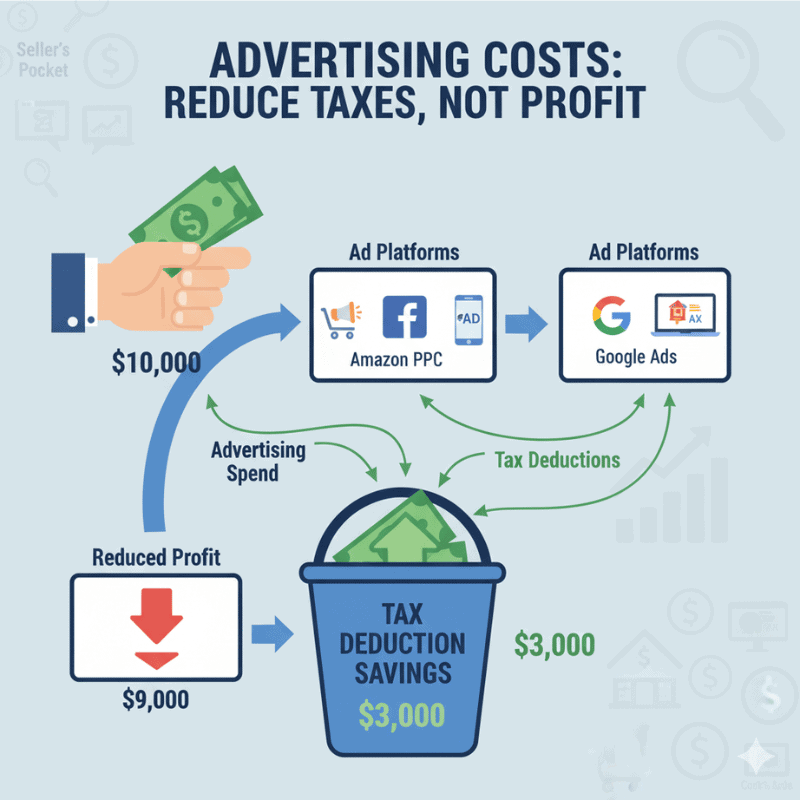
Money spent to get sales is tax deductible.
What counts:
- Amazon PPC.
- Facebook, Instagram, Google Ads.
- SEO services.
- Content creation, influencer partnerships.
👉 Ads eat into profit already. Deducting them means you don’t pay extra tax on money that already left your pocket.
Bonus Seller Tax Deductions Most Amazon Businesses Miss
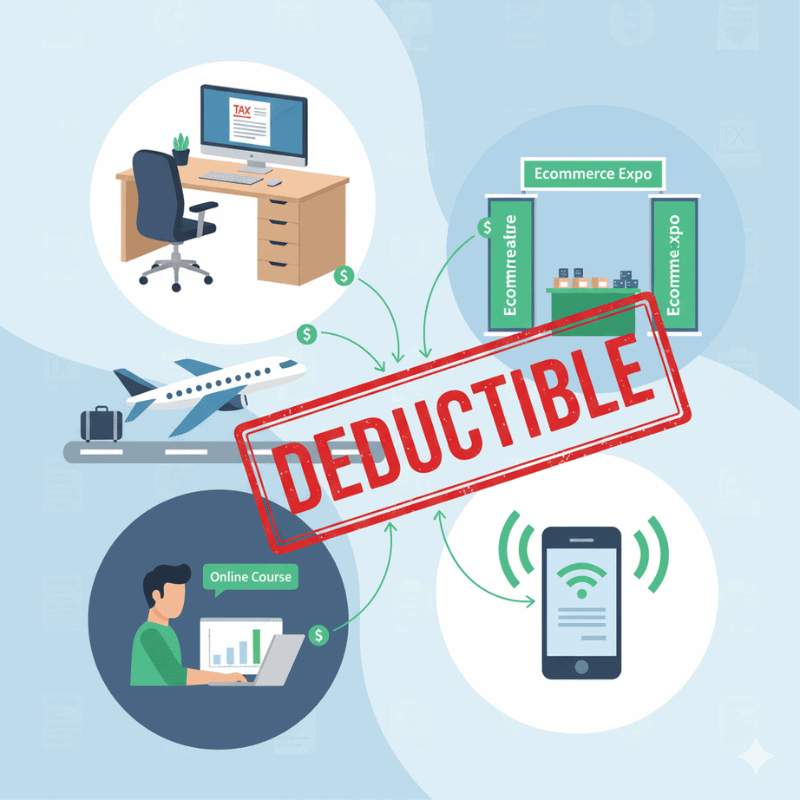
- Home Office Deduction → Simplified: $5 per sq ft (up to 300 sq ft) or actual expense method.
- Travel & Trade Shows → Flights, hotels, meals (50%), conference tickets.
- Education & Training → Courses, coaching, and books about selling.
- Office Supplies & Equipment → Pens, paper, laptops, printers, second monitor.
- Phone & Internet → Deduct business percentage of your bill.
Avoiding Common Mistakes with Amazon Seller Tax Deductions
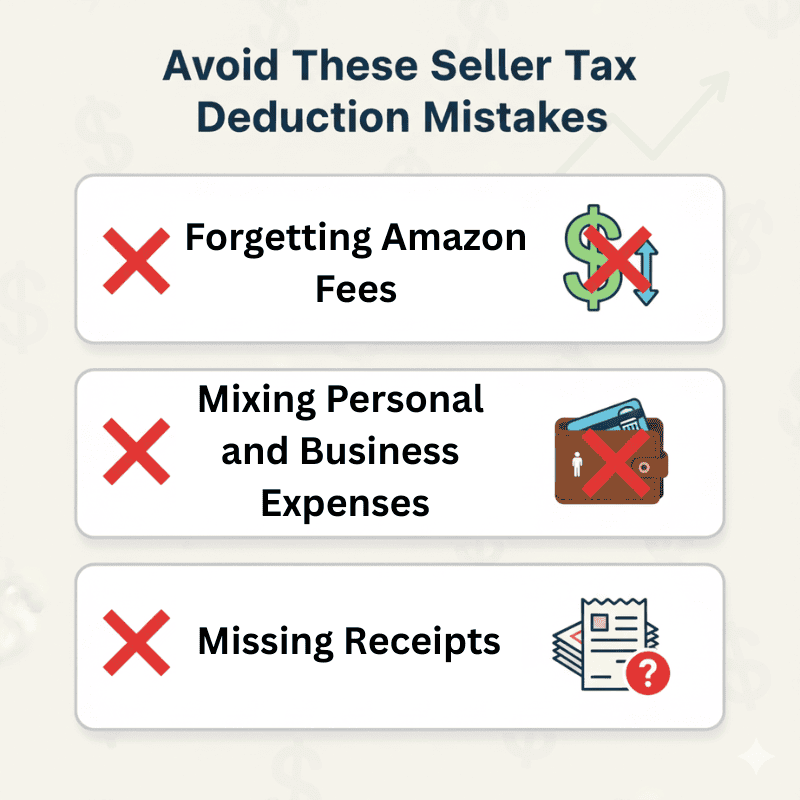
Even experienced sellers slip up when it comes to taxes.
Common mistakes include:
- Forgetting to deduct Amazon fees.
- Not tracking shipping supplies.
- Mixing personal and business expenses.
- Having no system for receipts or reconciliation.
👉 Missing just a few tax deductions can cost you thousands each year.
Tools & Systems to Simplify Seller Tax Deductions
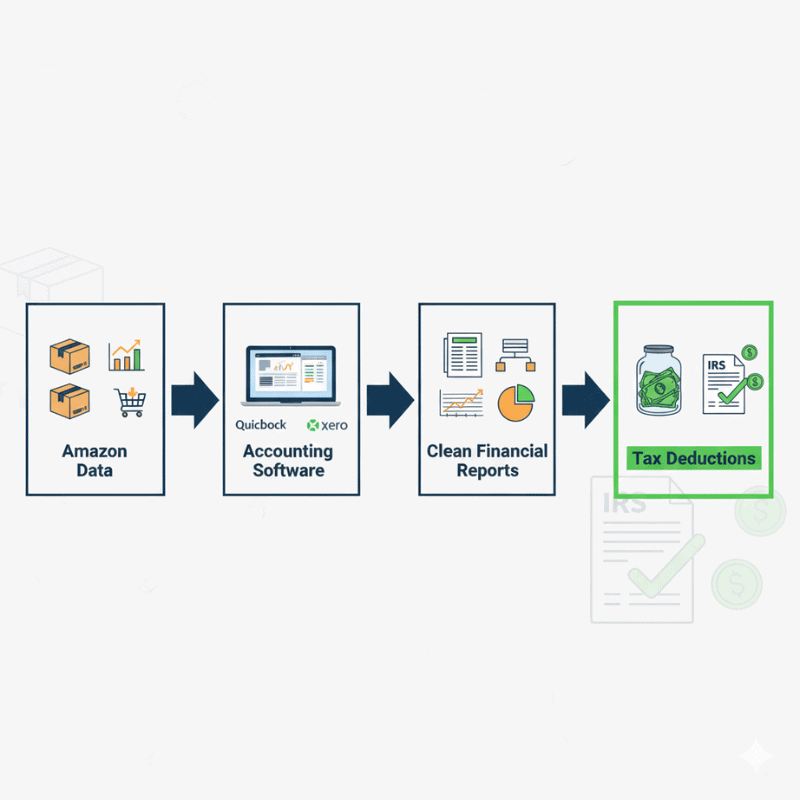
Trying to track deductions with messy spreadsheets can feel overwhelming. Thankfully, tools built for Amazon sellers automate the process.
Examples:
- Accounting Software (QuickBooks, Xero) → Tracks income, expenses, profit/loss.
- Sync Tools (A2X, Link My Books) → Automatically imports Amazon data.
- Research & Reporting Tools (SellerBoard, InventoryLab) → Analyze product profitability.
- Receipt Storage (Hubdoc, Dext, Google Drive) → Digital proof for audits.
- Hire a Pro → Bookkeepers who specialize in Amazon selling or business tax accountants keep your books audit-ready.
👉 What this means for you: Clean financials lower taxes and make your business credible to banks, brands, and partners.
Final Word: Maximize Your Amazon Seller Tax Savings
Imagine next tax season. Instead of scrambling through Amazon reports, your receipts and deductions are already tracked. You hand it to your accountant — or file confidently — knowing you’re not leaving money on the table.
👉 Bottom line: Every Amazon seller should track COGS, fees, shipping, tools, ads, and part of their home office. These deductions lower your taxes and protect your profit.

Knowing your deductions is just the beginning. Take our quick survey to qualify for an ecommerce tax strategy session where we’ll map out the #1 step you should take next to legally cut your tax bill. The survey helps you see which deductions you can claim right now, while also giving you clarity on the next steps for your Amazon business tax strategy.
Every deduction you miss is money out of your pocket. Don’t wait until tax season.
Think of this survey as a quick tax health check for your Amazon business — in just a few minutes, you’ll know where you’re missing deductions and what your next best move should be.
Disclaimer
Some of the links in this article are affiliate links, which means we may earn a small commission if you click through and make a purchase. This comes at no additional cost to you. We only recommend products and services we genuinely believe could benefit Amazon sellers and enhance their business efficiency. Thank you for supporting us and helping keep our content free.
Take Control of Your Finances Today!
Whether you’re a Reseller (Wholesale, Retail Arbitrage, Online Arbitrage, Dropshipping) or a Brand Owner, managing finances is key to your success. We support eCommerce businesses across major platforms like Amazon, Shopify, eBay, Walmart, Etsy, BigCommerce, and beyond.
See if you qualify for a free strategy session with our team to learn how Tall Oak Advisors can streamline your bookkeeping and ensure accurate tax preparation for your business.
Need a quick quote?
Or explore our range of free resources crafted specifically for eCommerce sellers:
- Business Tax Worksheet
- Frequently Asked Questions About Taxes and Bookkeeping
- Tax Write-Offs Every Amazon and Shopify Seller Should Know
Take the first step toward a stronger financial future and position your business for long-term success.
From hidden FBA fees to overlooked home office write-offs, these 11 deductions could mean the difference between profit and loss in 2025.
key points
Running an Amazon business is exciting — watching sales roll in feels amazing. But tax season? That’s when many sellers feel stressed, confused, and worried about overpaying.
The truth is: most Amazon sellers miss thousands of dollars in Amazon seller tax deductions every year simply because they don’t know what they can write off.
This guide breaks down every legitimate seller tax deduction Amazon businesses should know. You’ll see real-world examples, explained in plain English, and learn exactly how to keep more of what you earn.
Table of Contents
How Amazon Seller Tax Deductions Work
When you sell on Amazon, you bring in sales revenue. But the IRS only taxes your profit (sales minus expenses). Deductions are the legal way to subtract business costs from your income so you only pay tax on what you truly earned.
👉 What this means for you: Every dollar you deduct lowers the amount of income the IRS can tax. If you’re in the 25% tax bracket, a missed $1,000 deduction = $250 in extra taxes you didn’t need to pay.
Essential Seller Tax Deductions Every Amazon Business Should Know
Cost of Goods Sold (COGS) – The #1 Amazon Seller Tax Deduction
This is your biggest deduction — the money you spend to get products ready for sale.
What counts:
- The price you paid your supplier or manufacturer.
- Freight or shipping to bring inventory into Amazon FBA.
- Packaging included with the product if you are manufacturing your own product.
👉 Example: If you buy an item for $5 and sell it for $15, you don’t pay tax on the full $15. You deduct the $5 (plus shipping/packaging). If you miss this, you’ll overstate your profit — and overpay taxes.
Amazon Fees and Subscription Costs
Amazon takes a cut at every step. The IRS allows you to deduct all of them.
What counts:
- Referral fees (Amazon’s % cut of each sale).
- FBA fulfillment fees (pick, pack, ship).
- Storage fees at Amazon warehouses.
- Monthly Pro Seller subscription fee ($39.99).
👉 What this means for you: These fees usually get pulled out before Amazon pays you. If you don’t track them, you’ll think you made more than you did — and the IRS will happily tax you on money you never saw.
Shipping & Packaging Supplies Write-Offs
Even if Amazon ships orders, you pay to prep and send inventory in. Don’t forget these smaller costs.
What counts:
- Boxes, tape, poly mailers, bubble wrap.
- Labels and printer ink.
- UPS/FedEx/USPS bills for shipments to Amazon.
- Box cutters
- Label Printers
👉 Small costs add up fast. $30/month in tape and labels = $360/year. Add UPS bills, and you could be missing thousands in write-offs.
And you can be capturing another $1500 if you get a good thermal label printer if you’re doing your own prep.
We recommend the Zebra ZT411 Thermal Label Printer. This bad boy can print off thousands of labels a day, and it’s so easy to use. Detailed write-up coming soon. Labeling your own products can save you thousands of dollars on prep fees.
Software & Tools for Amazon Sellers
Your Amazon business likely runs on software — and it’s deductible.
What counts:
- Accounting software (QuickBooks Pro).
- Amazon-specific financial tools (Link My Books and, SellerBoard ) For pulling Amazon specific reports and tracking COGS, and sku profitability..
- Research tools (SmartScout, Keepa, Helium10).
👉 Example: If you’re paying $100/month for tools, that’s $1,200/year off your taxable income. The IRS considers these ordinary and necessary business expenses.
Professional Services and Tax Help for Amazon Sellers
Any professional help you pay for counts as a deduction.
What counts:
- Accountants, tax preparers, bookkeepers.
- Lawyers (contracts, trademarks, disputes).
- Consultants, coaches, mentors.
- Virtual assistants.
- Product photographers or designers.
👉 What this means for you: Don’t be afraid to hire help. The cost reduces your taxable income, and in many cases, the expertise saves you more than you spend.
Marketing & Advertising Tax Write-Offs for Amazon Sellers
Money spent to get sales is tax deductible.
What counts:
- Amazon PPC.
- Facebook, Instagram, Google Ads.
- SEO services.
- Content creation, influencer partnerships.
👉 Ads eat into profit already. Deducting them means you don’t pay extra tax on money that already left your pocket.
Bonus Seller Tax Deductions Most Amazon Businesses Miss
- Home Office Deduction → Simplified: $5 per sq ft (up to 300 sq ft) or actual expense method.
- Travel & Trade Shows → Flights, hotels, meals (50%), conference tickets.
- Education & Training → Courses, coaching, and books about selling.
- Office Supplies & Equipment → Pens, paper, laptops, printers, second monitor.
- Phone & Internet → Deduct business percentage of your bill.
Avoiding Common Mistakes with Amazon Seller Tax Deductions
Even experienced sellers slip up when it comes to taxes.
Common mistakes include:
- Forgetting to deduct Amazon fees.
- Not tracking shipping supplies.
- Mixing personal and business expenses.
- Having no system for receipts or reconciliation.
👉 Missing just a few tax deductions can cost you thousands each year.
Tools & Systems to Simplify Seller Tax Deductions
Trying to track deductions with messy spreadsheets can feel overwhelming. Thankfully, tools built for Amazon sellers automate the process.
Examples:
- Accounting Software (QuickBooks, Xero) → Tracks income, expenses, profit/loss.
- Sync Tools (A2X, Link My Books) → Automatically imports Amazon data.
- Research & Reporting Tools (SellerBoard, InventoryLab) → Analyze product profitability.
- Receipt Storage (Hubdoc, Dext, Google Drive) → Digital proof for audits.
- Hire a Pro → Bookkeepers who specialize in Amazon selling or business tax accountants keep your books audit-ready.
👉 What this means for you: Clean financials lower taxes and make your business credible to banks, brands, and partners.
Final Word: Maximize Your Amazon Seller Tax Savings
Imagine next tax season. Instead of scrambling through Amazon reports, your receipts and deductions are already tracked. You hand it to your accountant — or file confidently — knowing you’re not leaving money on the table.
👉 Bottom line: Every Amazon seller should track COGS, fees, shipping, tools, ads, and part of their home office. These deductions lower your taxes and protect your profit.
Knowing your deductions is just the beginning. Take our quick survey to qualify for an ecommerce tax strategy session where we’ll map out the #1 step you should take next to legally cut your tax bill. The survey helps you see which deductions you can claim right now, while also giving you clarity on the next steps for your Amazon business tax strategy.
Every deduction you miss is money out of your pocket. Don’t wait until tax season.
Think of this survey as a quick tax health check for your Amazon business — in just a few minutes, you’ll know where you’re missing deductions and what your next best move should be.
Disclaimer
Some of the links in this article are affiliate links, which means we may earn a small commission if you click through and make a purchase. This comes at no additional cost to you. We only recommend products and services we genuinely believe could benefit Amazon sellers and enhance their business efficiency. Thank you for supporting us and helping keep our content free.
Take Control of Your Finances Today!
Whether you’re a Reseller (Wholesale, Retail Arbitrage, Online Arbitrage, Dropshipping) or a Brand Owner, managing finances is key to your success. We support eCommerce businesses across major platforms like Amazon, Shopify, eBay, Walmart, Etsy, BigCommerce, and beyond.
See if you qualify for a free strategy session with our team to learn how Tall Oak Advisors can streamline your bookkeeping and ensure accurate tax preparation for your business.
Need a quick quote?
Or explore our range of free resources crafted specifically for eCommerce sellers:
- 7 Profit Crushing Mistakes That Will Destroy Your eCommerce Business
- Business Tax Worksheet
- Frequently Asked Questions About Taxes and Bookkeeping
- Tax Write-Offs Every Amazon and Shopify Seller Should Know
Take the first step toward a stronger financial future and position your business for long-term success.