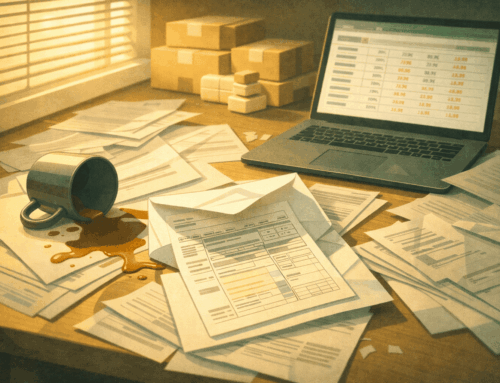


8 out of 10 online stores that close do so because of money problems. The root cause is often the same: they don’t check their e-commerce bookkeeping. If you sell on Amazon, Shopify, eBay, or Etsy, you need to know where every dollar goes. If you don’t, you can have problems with the IRS. You can pay big fines. And you can lose your business.
The good news is that today there are tools that make this work easier. They can cut the time you spend by 75% to 90%. This article explains why e-commerce bookkeeping matters and how to do it right.

The IRS Now Sees Everything You Sell
Every sale you make leaves a trail. PayPal, Stripe, Amazon, and Shopify send reports to the IRS. These reports are called 1099-K forms. They tell the IRS how much money you got.
Since July 2025, there are new rules. If you get more than $20,000 AND more than 200 payments through PayPal or Venmo, you will get a 1099-K. But if you use credit or debit cards with Stripe or Square, there is no minimum. Every dollar gets reported.
Why does this matter? Imagine the IRS sees you got $150,000. But you report only $120,000. There is a gap of $30,000. The IRS wants to know why.
Maybe the gap is returns. Maybe it is fees they charged you. But if your books are not in order, you can’t prove anything. And that is a problem.
The fines can be high:
- 5% of what you owe each month if you don’t pay on time (up to 25% total)
- 20% extra if the IRS says you were careless
- 7% interest per year on what you owe
If you owe $15,000 in taxes, the fines can add up to more than $7,500. And that is just the start.
The IRS can check your old tax returns. This is called an audit. They can go back 3 years to look at your records. So you need to keep your receipts and bank statements for 3 years.
But if you made a big mistake? Like you forgot to report 25% or more of your money? Then they can go back 6 years.
And if you never filed taxes at all? They can come after you forever. There is no time limit.
That’s why you keep your records. If the IRS asks questions, you need proof.
Real Stories of Businesses That Did Not Check Their Books
Jeff’s online store missed $39,000 in Stripe deposits. It was not fraud. They just did not count them. When the IRS did an audit, the store had to pay extra taxes and fines.
Alex had better luck. The IRS said she owed $46,500 for errors in her reports. She paid $2,100 for an accountant to review everything. The accountant found she only owed $412. She saved more than $22,000 by checking her books.
You might think: “I would never let that happen to my business.” But it happens all the time. More than you’d expect. Take Ecomom. This store sold products for moms. They raised $12 million from investors. Smart people believed in them. But they had a big problem they did not see. For every $60 order, they spent $89 to ship it. They lost $29 on every sale. The more they sold, the more they lost. How did this happen? The owner did not read the reports with care. He glanced at them and moved on. The store closed in 2013. This is not rare. Business owners get busy. They focus on sales, marketing, and customers. The numbers feel boring. So they skip them. Don’t skip them. A quick look at the books each month would have saved Ecomom. It can save you too time.
Studies show that 66% of audits on small businesses are due to bookkeeping errors. Not fraud. Just carelessness.

Each Platform Has Its Own Challenges
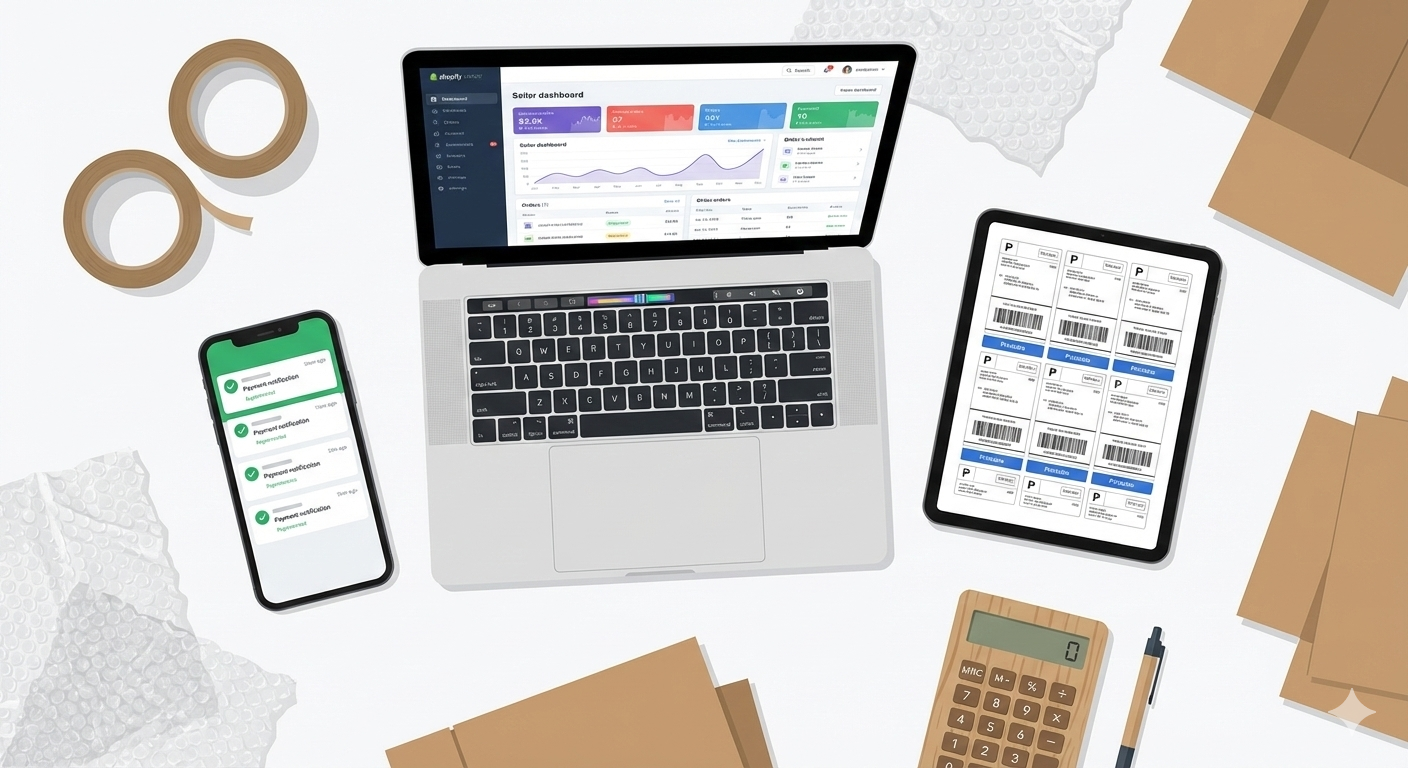
Selling online is complex. Each platform charges different fees. And each one pays you in a different way.
Amazon FBA is the hardest. They charge many fees: fees for selling, fees for shipping, fees for storing your product, and more. A study found that 67% of Amazon sellers have had fee errors. You can lose 1-3% of your sales each year due to these errors. If you check your books, you can get back 2-5% of what you spend on fees.
Shopify deposits less than what you sell. They charge processing fees (about 3% plus $0.30 per sale). They also deduct returns. And the money can take 3-7 days to reach your bank. If you sold a lot in December, some of that money arrives in January. This can confuse your books.
Etsy charges many small fees: $0.20 to list, 5% per sale, 3% + $0.25 for processing, and 2.5% if you sell in another currency. If you sell more than $10,000 a year, they also charge 15% for ads.
eBay combines several sales into one deposit. They charge about 13.25% + $0.30 per order. A sale from March 23 may not reach your bank until April 7.
The most common mistake on all platforms: recording the deposit as “sales.” But the deposit is not equal to your sales. It is less because they already took out the fees. If you don’t separate this, your numbers will be wrong.
If you sell in other countries, currency exchange can cost you 3-5% of your profits. On a million dollars a year, that is $30,000 to $50,000 lost.
Sales Taxes Are Now More Complex
Before, you only charged sales tax if you had a physical store in a state. That changed in 2018. Now, 45 states can ask you to collect sales tax. It does not matter where you live. Only how much you sell.
Most states ask you to collect tax if you sell $100,000 or more in a year. Some also count if you make 200 or more sales. But each state is different.
Some examples:
- California and Texas: $500,000 in sales
- New York: $500,000 AND 100+ sales
- Kansas: No minimum. One sale can trigger it.
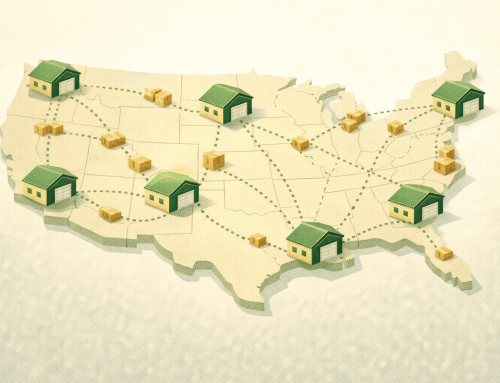
If you use Amazon FBA, your inventory may be in warehouses in several states. This can force you to collect tax in those states too.
The fines for not collecting sales tax are serious:
- 1% to 30% of what you owed, depending on the state
- Texas: 5% if you pay 1-30 days late, 10% after 30 days
- Georgia: Up to 50% if there is fraud
If you sell on multiple channels, you may have to collect tax in 15 states or more. Each has different due dates. Keeping your books in order is the only way to comply.


How to Build a System That Works
How often should you check your books? It depends on how many sales you make.
- Less than 100 sales per month: Once a month (2-3 hours)
- 100 to 1,000 sales per month: Every week (1-2 hours)
- More than 1,000 sales per month: Every day (30-60 minutes)
At minimum, check your books every month. If you do it every week, you find errors faster.
What accounts should you check?
- Your business bank account
- Your business credit cards
- Each platform where you sell (Amazon, Shopify, PayPal, Stripe)
- Your sales by channel
- The fees they charge you
- Your inventory
- The sales taxes you owe
- Returns and chargebacks
The most important trick: Use “clearing accounts” for each platform. Do not record the deposit directly as sales. First record total sales. Then subtract fees. What is left is your deposit. This way you see where every dollar goes.
Tools that help:
For general accounting:
- QuickBooks Online ($30/month): Most popular in the U.S.
- Xero ($15/month): Better if you sell in multiple countries
To connect your platforms:
- A2X ($29/month per platform): Very accurate for Amazon, Shopify, or Etsy
- Webgility ($49-$499/year): Good if you sell on multiple channels
- Link My Books ($16-$45/month): Good price if you have multiple channels
These tools do the heavy work for you. What used to take 15-20 hours per month can take just 3-5 hours. Some businesses have cut their time by more than 90%.
How to Protect Yourself If You Get Audited
In 2024, the IRS closed more than 500,000 audits. They collected more than $29 billion in extra taxes. If you work for yourself, your audit risk is about 2.5%.
Most audits are by mail. The IRS sends you a letter. You have to prove your numbers are correct.
Things that can cause an audit:
- Your deposits don’t match what you reported
- Your deductions are very high compared to your income
- You lose money year after year
- You use the home office or car deduction a lot
What they can ask for:
- All your income records
- Invoices for what you bought
- Bank statements
- Canceled checks
If your books are in order, the audit is easy. You just show that each deposit has its document. That each expense has its receipt. The auditor sees everything matches and moves on.
A clothing store owner faced an audit. The IRS said she owed $32,500 for deductions without proof. She had recorded sales on sticky notes. She had no meal receipts. And she said her car was 100% for business. After rebuilding her records, the IRS only charged her $2,300. She saved almost $14,000.
How long to keep your records?
- Normal records: 3 years
- Employee records: 4 years
- If you reported less than 25% of your income: 6 years
- Bad debts or worthless stocks: 7 years
- Property records: As long as you own them + 3 more years
The Benefits Grow Over Time
Checking your books does not just protect you from problems. It also helps you grow.
You can sell your business. If you want to sell your store someday, buyers want to see clean books. If your numbers are a mess, no one buys. An Amazon seller who processed thousands of orders per month was able to sell his business because he had everything in order.
You can get loans. Banks and investors ask for financial statements. If your books don’t match, they won’t lend to you.
You can make better decisions. If Ecomom had checked their books, they would have seen they lost $29 per order. They could have fixed it before going broke.
You can pay less in taxes. There are deductions you can take if your documents are in order. For example, you can deduct up to $2.5 million in equipment purchases under Section 179. But you need proof.
Businesses that check their books:
- Get back 2-5% of the fees they were overcharged
- Find products that don’t sell before costs pile up
- See money problems weeks before they become crises
- Pass audits without trouble

Let Tall Oak Advisors Help You Get Your E-commerce Bookkeeping
Let’s be honest. If you read this article and felt overwhelmed, that’s normal. This stuff is complicated. Really complicated.
Amazon fees. Shopify payouts. Sales tax in 45 states. 1099-K forms. Clearing accounts. It’s a lot.
Here’s the truth: you should NOT try to do this alone. You will make mistakes. Not because you’re not smart. But because e-commerce accounting is its own world.
Most accountants don’t get it. They know taxes. They know bookkeeping. But they don’t know Amazon FBA fees. They don’t know how Stripe settlements work. They don’t know why your Etsy deposits don’t match your sales.
We’ve seen business owners spend hundreds of thousands of dollars on accountants who still got it wrong. That’s not their fault. E-commerce is different.
That’s what makes Tall Oak Advisors different. We live in this world. We know the platforms. We know the problems. And we know how to fix them.
Take Control of Your Finances Today!
Whether you’re a Reseller (Wholesale, Retail Arbitrage, Online Arbitrage, Dropshipping) or a Brand Owner, managing finances is key to your success. We support eCommerce businesses across major platforms like Amazon, Shopify, eBay, Walmart, Etsy, BigCommerce, and beyond.
See if you qualify for a free strategy session with our team to learn how Tall Oak Advisors can streamline your bookkeeping and ensure accurate tax preparation for your business.
Need a quick quote?
Or explore our range of free resources crafted specifically for eCommerce sellers:
- Business Tax Worksheet
- Frequently Asked Questions About Taxes and Bookkeeping
- Tax Write-Offs Every Amazon and Shopify Seller Should Know
Take the first step toward a stronger financial future and position your business for long-term success.
8 out of 10 online stores that close do so because of money problems. The root cause is often the same: they don’t check their e-commerce bookkeeping. If you sell on Amazon, Shopify, eBay, or Etsy, you need to know where every dollar goes. If you don’t, you can have problems with the IRS. You can pay big fines. And you can lose your business.
The good news is that today there are tools that make this work easier. They can cut the time you spend by 75% to 90%. This article explains why e-commerce bookkeeping matters and how to do it right.
The IRS Now Sees Everything You Sell
Every sale you make leaves a trail. PayPal, Stripe, Amazon, and Shopify send reports to the IRS. These reports are called 1099-K forms. They tell the IRS how much money you got.
Since July 2025, there are new rules. If you get more than $20,000 AND more than 200 payments through PayPal or Venmo, you will get a 1099-K. But if you use credit or debit cards with Stripe or Square, there is no minimum. Every dollar gets reported.
Why does this matter? Imagine the IRS sees you got $150,000. But you report only $120,000. There is a gap of $30,000. The IRS wants to know why.
Maybe the gap is returns. Maybe it is fees they charged you. But if your books are not in order, you can’t prove anything. And that is a problem.
The fines can be high:
- 5% of what you owe each month if you don’t pay on time (up to 25% total)
- 20% extra if the IRS says you were careless
- 7% interest per year on what you owe
If you owe $15,000 in taxes, the fines can add up to more than $7,500. And that is just the start.
The IRS can check your old tax returns. This is called an audit. They can go back 3 years to look at your records. So you need to keep your receipts and bank statements for 3 years.
But if you made a big mistake? Like you forgot to report 25% or more of your money? Then they can go back 6 years.
And if you never filed taxes at all? They can come after you forever. There is no time limit.
That’s why you keep your records. If the IRS asks questions, you need proof.
Real Stories of Businesses That Did Not Check Their Books
Jeff’s online store missed $39,000 in Stripe deposits. It was not fraud. They just did not count them. When the IRS did an audit, the store had to pay extra taxes and fines.
Alex had better luck. The IRS said she owed $46,500 for errors in her reports. She paid $2,100 for an accountant to review everything. The accountant found she only owed $412. She saved more than $22,000 by checking her books.
You might think: “I would never let that happen to my business.” But it happens all the time. More than you’d expect. Take Ecomom. This store sold products for moms. They raised $12 million from investors. Smart people believed in them. But they had a big problem they did not see. For every $60 order, they spent $89 to ship it. They lost $29 on every sale. The more they sold, the more they lost. How did this happen? The owner did not read the reports with care. He glanced at them and moved on. The store closed in 2013. This is not rare. Business owners get busy. They focus on sales, marketing, and customers. The numbers feel boring. So they skip them. Don’t skip them. A quick look at the books each month would have saved Ecomom. It can save you too time.
Studies show that 66% of audits on small businesses are due to bookkeeping errors. Not fraud. Just carelessness.
Each Platform Has Its Own Challenges
Selling online is complex. Each platform charges different fees. And each one pays you in a different way.
Amazon FBA is the hardest. They charge many fees: fees for selling, fees for shipping, fees for storing your product, and more. A study found that 67% of Amazon sellers have had fee errors. You can lose 1-3% of your sales each year due to these errors. If you check your books, you can get back 2-5% of what you spend on fees.
Shopify deposits less than what you sell. They charge processing fees (about 3% plus $0.30 per sale). They also deduct returns. And the money can take 3-7 days to reach your bank. If you sold a lot in December, some of that money arrives in January. This can confuse your books.
Etsy charges many small fees: $0.20 to list, 5% per sale, 3% + $0.25 for processing, and 2.5% if you sell in another currency. If you sell more than $10,000 a year, they also charge 15% for ads.
eBay combines several sales into one deposit. They charge about 13.25% + $0.30 per order. A sale from March 23 may not reach your bank until April 7.
The most common mistake on all platforms: recording the deposit as “sales.” But the deposit is not equal to your sales. It is less because they already took out the fees. If you don’t separate this, your numbers will be wrong.
If you sell in other countries, currency exchange can cost you 3-5% of your profits. On a million dollars a year, that is $30,000 to $50,000 lost.
Sales Taxes Are Now More Complex
Before, you only charged sales tax if you had a physical store in a state. That changed in 2018. Now, 45 states can ask you to collect sales tax. It does not matter where you live. Only how much you sell.
Most states ask you to collect tax if you sell $100,000 or more in a year. Some also count if you make 200 or more sales. But each state is different.
Some examples:
- California and Texas: $500,000 in sales
- New York: $500,000 AND 100+ sales
- Kansas: No minimum. One sale can trigger it.
If you use Amazon FBA, your inventory may be in warehouses in several states. This can force you to collect tax in those states too.
The fines for not collecting sales tax are serious:
- 1% to 30% of what you owed, depending on the state
- Texas: 5% if you pay 1-30 days late, 10% after 30 days
- Georgia: Up to 50% if there is fraud
If you sell on multiple channels, you may have to collect tax in 15 states or more. Each has different due dates. Keeping your books in order is the only way to comply.
How to Build a System That Works
How often should you check your books? It depends on how many sales you make.
- Less than 100 sales per month: Once a month (2-3 hours)
- 100 to 1,000 sales per month: Every week (1-2 hours)
- More than 1,000 sales per month: Every day (30-60 minutes)
At minimum, check your books every month. If you do it every week, you find errors faster.
What accounts should you check?
- Your business bank account
- Your business credit cards
- Each platform where you sell (Amazon, Shopify, PayPal, Stripe)
- Your sales by channel
- The fees they charge you
- Your inventory
- The sales taxes you owe
- Returns and chargebacks
The most important trick: Use “clearing accounts” for each platform. Do not record the deposit directly as sales. First record total sales. Then subtract fees. What is left is your deposit. This way you see where every dollar goes.
Tools that help:
For general accounting:
- QuickBooks Online ($30/month): Most popular in the U.S.
- Xero ($15/month): Better if you sell in multiple countries
To connect your platforms:
- A2X ($29/month per platform): Very accurate for Amazon, Shopify, or Etsy
- Webgility ($49-$499/year): Good if you sell on multiple channels
- Link My Books ($16-$45/month): Good price if you have multiple channels
These tools do the heavy work for you. What used to take 15-20 hours per month can take just 3-5 hours. Some businesses have cut their time by more than 90%.
How to Protect Yourself If You Get Audited
In 2024, the IRS closed more than 500,000 audits. They collected more than $29 billion in extra taxes. If you work for yourself, your audit risk is about 2.5%.
Most audits are by mail. The IRS sends you a letter. You have to prove your numbers are correct.
Things that can cause an audit:
- Your deposits don’t match what you reported
- Your deductions are very high compared to your income
- You lose money year after year
- You use the home office or car deduction a lot
What they can ask for:
- All your income records
- Invoices for what you bought
- Bank statements
- Canceled checks
If your books are in order, the audit is easy. You just show that each deposit has its document. That each expense has its receipt. The auditor sees everything matches and moves on.
A clothing store owner faced an audit. The IRS said she owed $32,500 for deductions without proof. She had recorded sales on sticky notes. She had no meal receipts. And she said her car was 100% for business. After rebuilding her records, the IRS only charged her $2,300. She saved almost $14,000.
How long to keep your records?
- Normal records: 3 years
- Employee records: 4 years
- If you reported less than 25% of your income: 6 years
- Bad debts or worthless stocks: 7 years
- Property records: As long as you own them + 3 more years
The Benefits Grow Over Time
Checking your books does not just protect you from problems. It also helps you grow.
You can sell your business. If you want to sell your store someday, buyers want to see clean books. If your numbers are a mess, no one buys. An Amazon seller who processed thousands of orders per month was able to sell his business because he had everything in order.
You can get loans. Banks and investors ask for financial statements. If your books don’t match, they won’t lend to you.
You can make better decisions. If Ecomom had checked their books, they would have seen they lost $29 per order. They could have fixed it before going broke.
You can pay less in taxes. There are deductions you can take if your documents are in order. For example, you can deduct up to $2.5 million in equipment purchases under Section 179. But you need proof.
Businesses that check their books:
- Get back 2-5% of the fees they were overcharged
- Find products that don’t sell before costs pile up
- See money problems weeks before they become crises
- Pass audits without trouble
Let Tall Oak Advisors Help You Get Your E-commerce Bookkeeping
Let’s be honest. If you read this article and felt overwhelmed, that’s normal. This stuff is complicated. Really complicated.
Amazon fees. Shopify payouts. Sales tax in 45 states. 1099-K forms. Clearing accounts. It’s a lot.
Here’s the truth: you should NOT try to do this alone. You will make mistakes. Not because you’re not smart. But because e-commerce accounting is its own world.
Most accountants don’t get it. They know taxes. They know bookkeeping. But they don’t know Amazon FBA fees. They don’t know how Stripe settlements work. They don’t know why your Etsy deposits don’t match your sales.
We’ve seen business owners spend hundreds of thousands of dollars on accountants who still got it wrong. That’s not their fault. E-commerce is different.
That’s what makes Tall Oak Advisors different. We live in this world. We know the platforms. We know the problems. And we know how to fix them.
Take Control of Your Finances Today!
Whether you’re a Reseller (Wholesale, Retail Arbitrage, Online Arbitrage, Dropshipping) or a Brand Owner, managing finances is key to your success. We support eCommerce businesses across major platforms like Amazon, Shopify, eBay, Walmart, Etsy, BigCommerce, and beyond.
See if you qualify for a free strategy session with our team to learn how Tall Oak Advisors can streamline your bookkeeping and ensure accurate tax preparation for your business.
Need a quick quote?
Or explore our range of free resources crafted specifically for eCommerce sellers:
- 7 Profit Crushing Mistakes That Will Destroy Your eCommerce Business
- Business Tax Worksheet
- Frequently Asked Questions About Taxes and Bookkeeping
- Tax Write-Offs Every Amazon and Shopify Seller Should Know
Take the first step toward a stronger financial future and position your business for long-term success.