
READ YOUR BUSINESS SERIES | A Monthly Financial Guide for E-Commerce Entrepreneurs | Article 1 of 5
If you have been selling online for any amount of time, you already know more about your numbers than you might give yourself credit for. You track your orders. You watch your ad spend. You know when a good sales week feels different from a slow one.
So this is not a conversation about starting from zero. It is about taking what you already do well and adding one layer that changes everything: a monthly review of your Profit & Loss statement.
This is the first article in a five-part series on the financial reports that make the biggest difference for e-commerce businesses. We are starting here because the P&L — also called the income statement — is the foundation. Get comfortable with this one, and the rest of the series will feel much more natural.

So, What Exactly Is a P&L?
Your Profit & Loss statement is a summary of your business’s financial activity over a period of time — usually a month, a quarter, or a year. It answers one central question: after everything was said and done, did the business make money?
It does that by walking through three layers:
- Revenue: All the money coming in from sales across every channel.
- Cost of Goods Sold (COGS): What it actually cost you to produce or purchase the products you sold — materials, manufacturing, shipping to your warehouse.
- Operating Expenses: Everything else it takes to run the business — platform fees, advertising, software, contractor payments, packaging, and so on.
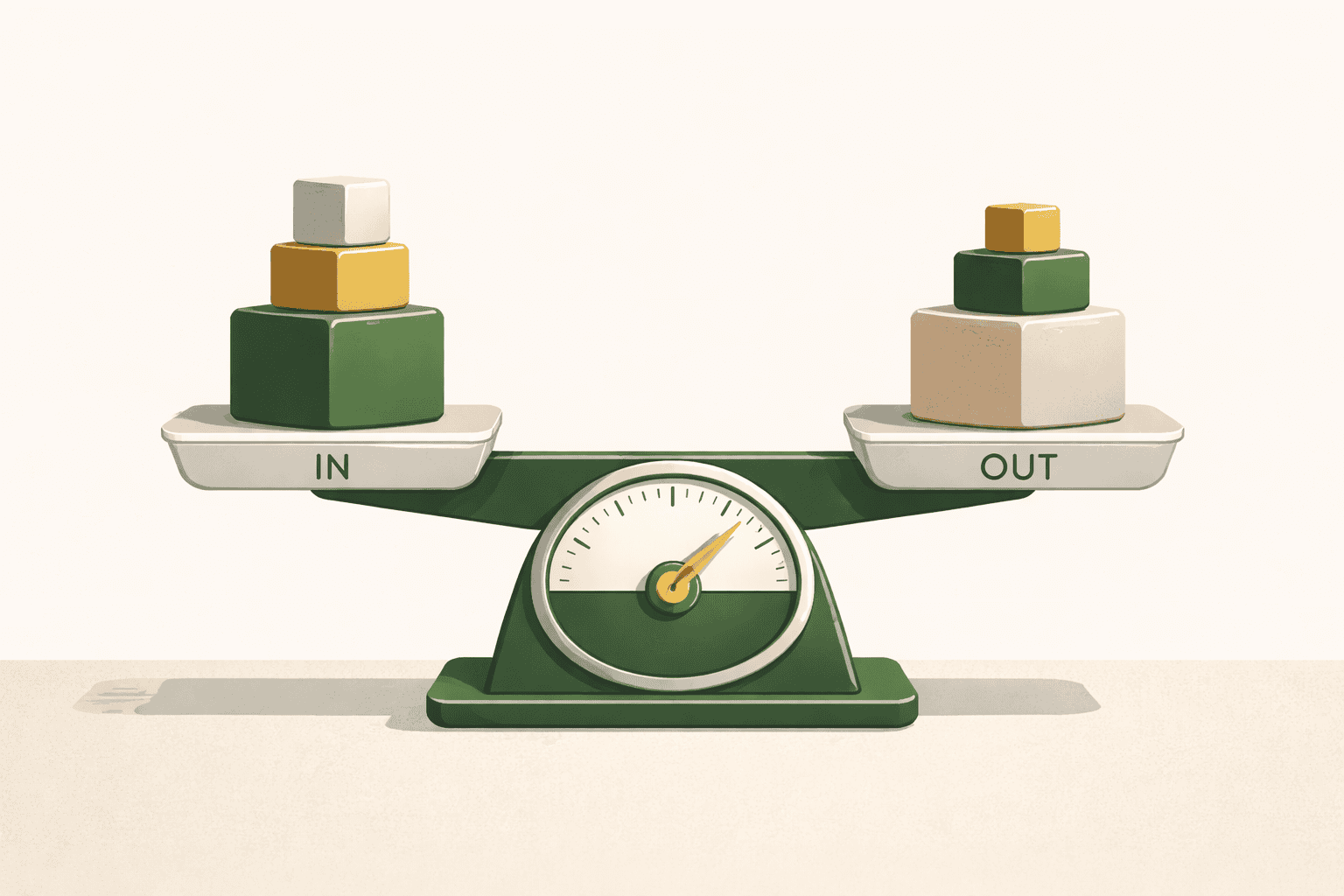
Subtract COGS from revenue and you get your gross profit. Subtract your operating expenses from that and you get your net profit — or net loss. That bottom number is what your business actually earned.
Why Monthly? Why Not Just Check at Tax Time?
Tax season is a great time to look back. But monthly reviews are how you stay ahead.
For example: a seller has a strong revenue month — orders are up, the store looks busy. But somewhere between the Amazon fees, the shipping costs, the ad spend, and the cost of the products themselves, the margins got quietly squeezed. By the time that shows up at year-end, it has been happening for months.
A monthly P&L review catches those shifts early, when there is still time to adjust pricing, renegotiate with a supplier, or pull back on a campaign that is not converting.
A note on timing: For your monthly P&L to be useful, it needs to be ready within the first two weeks of the following month. If you are getting your January numbers in March, you are always reacting — never steering.

What to Actually Look For Each Month
Once you have your P&L in front of you, here are the four things worth paying attention to:
1. Gross Profit Margin
This is your revenue minus the direct cost of the products you sold, expressed as a percentage. For most physical goods e-commerce businesses, a healthy gross margin falls somewhere between 40% and 60%. If yours is sitting below 30%, that is worth digging into — it usually points to pricing, supplier costs, or how returns are being recorded.
The formula is simple: (Revenue minus COGS) divided by Revenue, multiplied by 100.
2. Net Profit Margin
This is your true bottom line. After every expense is paid, what percentage of each dollar in revenue actually stayed in the business? A sustainable range for e-commerce is generally 10–20%. Under 5% is not a crisis on its own, but it is worth asking why — and whether any expenses have crept up without a corresponding growth in revenue.
3. Month-Over-Month Trends
Numbers in isolation are interesting. Numbers compared to last month — or the same month last year — are genuinely useful. Is your gross margin improving or slipping? Are your operating expenses growing faster than your revenue? Trends tell the story that single snapshots cannot.
4. The Platform Fee Line
This one is easy to underestimate. Amazon, Shopify, Etsy, and other platforms charge fees that can quietly represent 25–40% of your gross revenue when you add up referral fees, FBA fees, and transaction fees. These should have their own line on your P&L — not buried inside a general “cost of goods” category — so you can see exactly what each channel is costing you to operate.
A Quick Note on Returns
E-commerce return rates can run as high as 30%, and how returns are recorded has a direct impact on the accuracy of your COGS — and therefore your entire P&L.
When a return comes in, the outcome depends on the condition of the item. If Amazon marks it as sellable, it goes back into your inventory, and your bookkeeping needs a manual adjustment to reflect that — otherwise your cost of goods sold will be overstated for that period. If the item comes back unsellable, the cost stays in COGS, since you incurred that expense without a completed sale to show for it. One thing worth knowing: if you later sell those unsellable items on a secondary platform like eBay or Facebook Marketplace, assign them a minimal buy cost (even something like $0.01) so your records stay clean and traceable.
Reimbursements are another piece of this that often gets missed. When Amazon reimburses you for lost or damaged inventory, those amounts need to be manually adjusted in your books to keep your COGS reporting accurate. Left unrecorded, reimbursements can distort your margins in ways that are hard to catch until tax season.

How This Connects to Your Taxes
Your P&L is the backbone of your tax return. Every deduction you take — advertising, software, shipping, contractor payments — needs to be accurately reflected here. In 2025, platforms like Amazon, Shopify, PayPal, and Etsy are required to issue Form 1099-K for any seller with more than $2,500 in gross payments. That threshold drops to $600 in 2026.
What that means practically: the IRS now has a gross revenue number for your business. Your tax return needs to reconcile to it — or there needs to be a clear, documented explanation of the difference (refunds, returns, fees). A clean P&L makes that reconciliation straightforward. A messy one makes it stressful.
Quick reminder: 1099-Ks report gross payment volume — before any fees or returns are deducted. Your P&L should show net revenue. Those two numbers will not match, and that is completely fine. What matters is that you have documentation showing how one connects to the other.
Getting Started This Month
If you are not already running a monthly P&L, try to start with:
- Making sure your platform fees from each channel are categorized separately, not rolled into COGS.
- Noting your gross margin and net margin, and compare them to the previous month.
- Flagging anything that changed by more than 10–15% — up or down — and ask why.
That is it. You do not need to analyze every line on your first pass. Getting into the habit of opening the report and reviewing those four things is the whole goal for month one.
If reviewing these numbers every month sounds like one more thing on an already full plate, that is completely understandable — and it is exactly why we are here.
At Tall Oak Advisors, we work alongside e-commerce entrepreneurs to set up clean, organized books, generate monthly financial reports, and walk you through what the numbers actually mean for your business.
You do not have to figure this out alone. Whether you need full-service bookkeeping or just a second set of eyes on your reports each month, we would love to be part of your team.
Reach out here and let’s talk about what that looks like for you.

Coming Up Next
In Article 2 of this series, we are covering the Cash Flow Statement — a report that looks similar to the P&L but answers a completely different question. (Spoiler: a business can be profitable and still run out of cash. The cash flow statement is how you make sure that never sneaks up on you.)
Have questions about your P&L or want to talk through what your numbers are telling you? Tall Oak Advisors works with e-commerce entrepreneurs everyday – reach out any time.
Take Control of Your Finances Today!
Whether you’re a Reseller (Wholesale, Retail Arbitrage, Online Arbitrage, Dropshipping) or a Brand Owner, managing finances is key to your success. We support eCommerce businesses across major platforms like Amazon, Shopify, eBay, Walmart, Etsy, BigCommerce, and beyond.
See if you qualify for a free strategy session with our team to learn how Tall Oak Advisors can streamline your bookkeeping and ensure accurate tax preparation for your business.
Need a quick quote?
Or explore our range of free resources crafted specifically for eCommerce sellers:
- Business Tax Worksheet
- Frequently Asked Questions About Taxes and Bookkeeping
- Tax Write-Offs Every Amazon and Shopify Seller Should Know
Take the first step toward a stronger financial future and position your business for long-term success.
READ YOUR BUSINESS SERIES | A Monthly Financial Guide for E-Commerce Entrepreneurs | Article 1 of 5
If you have been selling online for any amount of time, you already know more about your numbers than you might give yourself credit for. You track your orders. You watch your ad spend. You know when a good sales week feels different from a slow one.
So this is not a conversation about starting from zero. It is about taking what you already do well and adding one layer that changes everything: a monthly review of your Profit & Loss statement.
This is the first article in a five-part series on the financial reports that make the biggest difference for e-commerce businesses. We are starting here because the P&L — also called the income statement — is the foundation. Get comfortable with this one, and the rest of the series will feel much more natural.
So, What Exactly Is a P&L?
Your Profit & Loss statement is a summary of your business’s financial activity over a period of time — usually a month, a quarter, or a year. It answers one central question: after everything was said and done, did the business make money?
It does that by walking through three layers:
- Revenue: All the money coming in from sales across every channel.
- Cost of Goods Sold (COGS): What it actually cost you to produce or purchase the products you sold — materials, manufacturing, shipping to your warehouse.
- Operating Expenses: Everything else it takes to run the business — platform fees, advertising, software, contractor payments, packaging, and so on.
Subtract COGS from revenue and you get your gross profit. Subtract your operating expenses from that and you get your net profit — or net loss. That bottom number is what your business actually earned.
Why Monthly? Why Not Just Check at Tax Time?
Tax season is a great time to look back. But monthly reviews are how you stay ahead.
For example: a seller has a strong revenue month — orders are up, the store looks busy. But somewhere between the Amazon fees, the shipping costs, the ad spend, and the cost of the products themselves, the margins got quietly squeezed. By the time that shows up at year-end, it has been happening for months.
A monthly P&L review catches those shifts early, when there is still time to adjust pricing, renegotiate with a supplier, or pull back on a campaign that is not converting.
A note on timing: For your monthly P&L to be useful, it needs to be ready within the first two weeks of the following month. If you are getting your January numbers in March, you are always reacting — never steering.
What to Actually Look For Each Month
Once you have your P&L in front of you, here are the four things worth paying attention to:
1. Gross Profit Margin
This is your revenue minus the direct cost of the products you sold, expressed as a percentage. For most physical goods e-commerce businesses, a healthy gross margin falls somewhere between 40% and 60%. If yours is sitting below 30%, that is worth digging into — it usually points to pricing, supplier costs, or how returns are being recorded.
The formula is simple: (Revenue minus COGS) divided by Revenue, multiplied by 100.
2. Net Profit Margin
This is your true bottom line. After every expense is paid, what percentage of each dollar in revenue actually stayed in the business? A sustainable range for e-commerce is generally 10–20%. Under 5% is not a crisis on its own, but it is worth asking why — and whether any expenses have crept up without a corresponding growth in revenue.
3. Month-Over-Month Trends
Numbers in isolation are interesting. Numbers compared to last month — or the same month last year — are genuinely useful. Is your gross margin improving or slipping? Are your operating expenses growing faster than your revenue? Trends tell the story that single snapshots cannot.
4. The Platform Fee Line
This one is easy to underestimate. Amazon, Shopify, Etsy, and other platforms charge fees that can quietly represent 25–40% of your gross revenue when you add up referral fees, FBA fees, and transaction fees. These should have their own line on your P&L — not buried inside a general “cost of goods” category — so you can see exactly what each channel is costing you to operate.
A Quick Note on Returns
E-commerce return rates can run as high as 30%, and how returns are recorded has a direct impact on the accuracy of your COGS — and therefore your entire P&L.
When a return comes in, the outcome depends on the condition of the item. If Amazon marks it as sellable, it goes back into your inventory, and your bookkeeping needs a manual adjustment to reflect that — otherwise your cost of goods sold will be overstated for that period. If the item comes back unsellable, the cost stays in COGS, since you incurred that expense without a completed sale to show for it. One thing worth knowing: if you later sell those unsellable items on a secondary platform like eBay or Facebook Marketplace, assign them a minimal buy cost (even something like $0.01) so your records stay clean and traceable.
Reimbursements are another piece of this that often gets missed. When Amazon reimburses you for lost or damaged inventory, those amounts need to be manually adjusted in your books to keep your COGS reporting accurate. Left unrecorded, reimbursements can distort your margins in ways that are hard to catch until tax season.
How This Connects to Your Taxes
Your P&L is the backbone of your tax return. Every deduction you take — advertising, software, shipping, contractor payments — needs to be accurately reflected here. In 2025, platforms like Amazon, Shopify, PayPal, and Etsy are required to issue Form 1099-K for any seller with more than $2,500 in gross payments. That threshold drops to $600 in 2026.
What that means practically: the IRS now has a gross revenue number for your business. Your tax return needs to reconcile to it — or there needs to be a clear, documented explanation of the difference (refunds, returns, fees). A clean P&L makes that reconciliation straightforward. A messy one makes it stressful.
Quick reminder: 1099-Ks report gross payment volume — before any fees or returns are deducted. Your P&L should show net revenue. Those two numbers will not match, and that is completely fine. What matters is that you have documentation showing how one connects to the other.
Getting Started This Month
If you are not already running a monthly P&L, try to start with:
- Making sure your platform fees from each channel are categorized separately, not rolled into COGS.
- Noting your gross margin and net margin, and compare them to the previous month.
- Flagging anything that changed by more than 10–15% — up or down — and ask why.
That is it. You do not need to analyze every line on your first pass. Getting into the habit of opening the report and reviewing those four things is the whole goal for month one.
If reviewing these numbers every month sounds like one more thing on an already full plate, that is completely understandable — and it is exactly why we are here.
At Tall Oak Advisors, we work alongside e-commerce entrepreneurs to set up clean, organized books, generate monthly financial reports, and walk you through what the numbers actually mean for your business.
You do not have to figure this out alone. Whether you need full-service bookkeeping or just a second set of eyes on your reports each month, we would love to be part of your team.
Reach out here and let’s talk about what that looks like for you.
Coming Up Next
In Article 2 of this series, we are covering the Cash Flow Statement — a report that looks similar to the P&L but answers a completely different question. (Spoiler: a business can be profitable and still run out of cash. The cash flow statement is how you make sure that never sneaks up on you.)
Have questions about your P&L or want to talk through what your numbers are telling you? Tall Oak Advisors works with e-commerce entrepreneurs everyday – reach out any time.
Take Control of Your Finances Today!
Whether you’re a Reseller (Wholesale, Retail Arbitrage, Online Arbitrage, Dropshipping) or a Brand Owner, managing finances is key to your success. We support eCommerce businesses across major platforms like Amazon, Shopify, eBay, Walmart, Etsy, BigCommerce, and beyond.
See if you qualify for a free strategy session with our team to learn how Tall Oak Advisors can streamline your bookkeeping and ensure accurate tax preparation for your business.
Need a quick quote?
Or explore our range of free resources crafted specifically for eCommerce sellers:
- 7 Profit Crushing Mistakes That Will Destroy Your eCommerce Business
- Business Tax Worksheet
- Frequently Asked Questions About Taxes and Bookkeeping
- Tax Write-Offs Every Amazon and Shopify Seller Should Know
Take the first step toward a stronger financial future and position your business for long-term success.