

A Plain-English Guide for E-Commerce Entrepreneurs
Here’s a scary truth. One Amazon seller thought he was safe. He sold phone cases from his garage in Ohio. He never left the state. But his products sat in Amazon warehouses across 20 states. Then four audit notices arrived at once. He owed $8,000 in taxes. After penalties? His bill hit $23,000.
This happens every day. And it can happen to you.
If you sell online in more than one state, you face a web of tax rules. Each state has its own laws. Each state has its own deadlines. Get it wrong, and you pay big fines.
But here’s the good news. The rules are not hard to follow. You just need to know what they are. This guide will show you everything. Step by step.
What Changed? The Rules That Affect You Now
In 2018, everything changed. The Supreme Court ruled in a case called South Dakota v. Wayfair. Before this case, you only paid sales tax where you had a store or office. Now? You pay tax where your customers are.
This is called “economic nexus.” It means your sales activity creates a tax tie to a state. No store needed. No employees needed. Just sales.
The Magic Numbers You Need to Know
Most states use a $100,000 threshold. If you sell $100,000 worth of goods to people in a state, you must collect sales tax there. Some states also count transactions. Sell to 200 people? You might owe tax even if you’re under $100,000.
Here are the key thresholds for 2026:
- Most states: $100,000 in sales
- California and Texas: $500,000 in sales
- New York: $500,000 in sales AND 100 transactions
- Some states like Georgia: $100,000 OR 200 transactions
Big Change for 2026: States Are Simplifying
Good news is on the way. States are dropping the transaction test. In 2025, Alaska and Utah removed their 200-transaction rule. Illinois follows in 2026. This means you only track dollars, not order counts. Easier for you.


The Amazon FBA Trap: Your Inventory Creates Tax Ties
If you use Fulfillment by Amazon, listen up. This is where most sellers get caught.
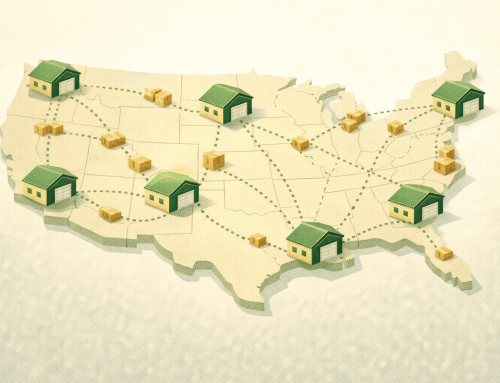
When you send products to Amazon, they don’t stay put. Amazon moves your stuff around. They want to ship fast. So they spread your inventory across many warehouses.
Here’s the problem. Most states say: “If your stuff sits in our state, you owe us tax.” This is called “physical nexus.” Your products in a Texas warehouse? You have Texas nexus. Your products in a California warehouse? You have California nexus.
How to Find Where Amazon Stores Your Products
You can check this yourself. Here’s how:
- Log in to Amazon Seller Central
- Go to Reports > Fulfillment > Inventory Event Detail
- Download the report
- Look at the “fulfillment-center-id” column
- The three-letter code tells you the airport nearby (DFW = Dallas, Texas)
One seller checked his report. He found inventory in 99 different warehouses across most U.S. states. He only shipped to two locations. Amazon spread his products everywhere.
Good News: Amazon Collects Tax for You (But You’re Not Off the Hook)
Every state with sales tax now has “marketplace facilitator” laws. This means Amazon, eBay, Etsy, and Walmart must collect and pay sales tax for you. This is huge. It saves you tons of work.
But wait. You still have duties.
Here’s what you still must do:
- Register for sales tax permits in states where you have nexus
- File tax returns (even if the amount due is zero)
- Collect tax on sales from your own website
- Handle any back taxes from before marketplace laws took effect
Amazon started collecting tax for sellers in 2017-2019, depending on the state. If you had nexus before then, you might still owe back taxes.
Five Mistakes That Get Sellers in Trouble
Mistake 1: Thinking Amazon Handles Everything
Amazon collects and pays tax on Amazon sales. But you still need to register. You still need to file returns. And if you sell on your own website too? That’s all on you.
Mistake 2: Not Tracking Inventory Locations
Amazon moves your stuff without asking. Your flip flops in Ohio might ship from California. Now you have nexus in both states. Check your inventory reports every month.
Mistake 3: Waiting to Register
States now check when you registered against when you hit the threshold. If there’s a gap? They want back taxes, penalties, and interest. Don’t wait. Register as soon as you cross the line.
Mistake 4: Filing Late or Not at All
Even if you owe zero dollars, you must file a return. Missing a deadline triggers penalties. In New York, late filing costs 10% of tax due for the first month. Then 1% more each month after.
Mistake 5: Not Keeping Records
Keep sales records for at least four years. Many states can audit you for that long. No records? The auditor will estimate. And their guess is usually higher than reality.
What Happens If You Don’t Comply: The Real Costs
States are getting aggressive. They want their money. And they have new tools to find you.
How States Find Non-Compliant Sellers
- Amazon gives them seller data (they have to by law)
- States buy lists of online sellers from data companies
- States share info with each other (Illinois asks for data on sales to nearby states)
- States send questionnaires to unregistered sellers they suspect have nexus
Penalty Breakdown by Type
Here’s what you might pay if caught:
- Late filing penalty: 10% to 30% of tax owed
- Late payment penalty: Additional percentage on top
- Interest: Compounds monthly on unpaid amounts
- Negligence penalty: 10% (California, New York)
- Fraud penalty: Up to 25% to 100% of tax owed
- Washington State: Penalties as high as 39%
Worst case? Criminal charges. Tax evasion can mean up to five years in prison and fines up to $100,000 for individuals or $500,000 for companies.
Already Behind? Here’s Your Lifeline: Voluntary Disclosure Agreements
If you owe back taxes, don’t panic. There’s a legal way out. It’s called a Voluntary Disclosure Agreement (VDA).
What Is a VDA?
A VDA is a deal between you and the state. You come forward and admit you owe taxes. In return, the state gives you breaks on penalties and limits how far back they look.
VDA Benefits
- Reduced or waived penalties (often 100% waiver)
- Limited look-back period (usually 3-4 years instead of 8-10)
- Stay anonymous during negotiations
- Avoid criminal prosecution
Example: VDA Savings
Say you owe 10 years of back taxes totaling $50,000. In an audit, you’d pay all $50,000 plus penalties (up to 30%) plus interest. That could reach $80,000 or more. With a VDA, the state might only look at 3-4 years. Your bill drops to $15,000-$20,000. And no penalties.
Who Qualifies for a VDA?
You can apply if:
- The state has not contacted you about an audit
- You’re not already registered for that tax type in the state
- You act before the state finds you
Important: Once an audit starts, VDA is off the table. Act fast.
Your 2026 Compliance Checklist: Step by Step
Step 1: Find Your Nexus States
Make a list of states where you might owe tax. Check for:
- States where you made $100,000 or more in sales
- States where you had 200 or more transactions (if the state counts them)
- States where Amazon stores your inventory
- States where you have employees, offices, or warehouses
- States where you attended trade shows and sold products
Step 2: Register for Sales Tax Permits
Apply for a sales tax permit in each nexus state. This is usually free. Do it through the state’s Department of Revenue website. You’ll get a permit number to put on your returns.
Step 3: Set Up Tax Collection
Amazon and other marketplaces handle tax on their platforms. For your own website, use tax software. Good options: TaxJar, Avalara, TaxCloud. These tools track rates for 13,000+ tax jurisdictions. They update automatically when rules change.
Step 4: File Returns on Time
Each state has its own schedule. Common options:
- Monthly (if you collect a lot of tax)
- Quarterly (most common)
- Annually (if you collect little tax)
File a return even if you owe nothing. This is called a “zero return.” Skipping it can trigger penalties.
Step 5: Keep Clean Records
Save these for at least four years:
- Sales reports by state
- Tax collected by state
- Exemption certificates from wholesale buyers
- Amazon inventory reports showing warehouse locations
- All filed returns and payment confirmations
Step 6: Review Quarterly
Every three months, check your sales by state. Are you approaching a threshold? Did Amazon move your inventory to a new state? Did tax rates change? Catch problems early.
The Bottom Line: Compliance Costs Less Than Penalties
Remember that seller who owed $23,000 after penalties? His actual tax was $8,000. The extra $15,000 was penalties and interest. He could have avoided it all with basic tracking. Cost of good tax software? About $100-500 per year.
The math is simple. Compliance costs hundreds. Non-compliance costs thousands.
States are getting smarter and more aggressive. They share data. They buy seller lists. They send questionnaires. If you’re not compliant, it’s only a matter of time before they find you.
Don’t wait for an audit notice. Take action now. Your future self will thank you.
Not sure where to start? At Tall Oak Advisors, we help e-commerce sellers understand their financial picture and connect them with the right resources. While sales tax compliance isn’t our specialty, we work with trusted partners who handle multi-state filings and can guide you toward the support you need. Reach out to us… we’re happy to point you in the right direction.

Take Control of Your Finances Today!
Whether you’re a Reseller (Wholesale, Retail Arbitrage, Online Arbitrage, Dropshipping) or a Brand Owner, managing finances is key to your success. We support eCommerce businesses across major platforms like Amazon, Shopify, eBay, Walmart, Etsy, BigCommerce, and beyond.
See if you qualify for a free strategy session with our team to learn how Tall Oak Advisors can streamline your bookkeeping and ensure accurate tax preparation for your business.
Need a quick quote?
Or explore our range of free resources crafted specifically for eCommerce sellers:
- Business Tax Worksheet
- Frequently Asked Questions About Taxes and Bookkeeping
- Tax Write-Offs Every Amazon and Shopify Seller Should Know
Take the first step toward a stronger financial future and position your business for long-term success.
A Plain-English Guide for E-Commerce Entrepreneurs
Here’s a scary truth. One Amazon seller thought he was safe. He sold phone cases from his garage in Ohio. He never left the state. But his products sat in Amazon warehouses across 20 states. Then four audit notices arrived at once. He owed $8,000 in taxes. After penalties? His bill hit $23,000.
This happens every day. And it can happen to you.
If you sell online in more than one state, you face a web of tax rules. Each state has its own laws. Each state has its own deadlines. Get it wrong, and you pay big fines.
But here’s the good news. The rules are not hard to follow. You just need to know what they are. This guide will show you everything. Step by step.
What Changed? The Rules That Affect You Now
In 2018, everything changed. The Supreme Court ruled in a case called South Dakota v. Wayfair. Before this case, you only paid sales tax where you had a store or office. Now? You pay tax where your customers are.
This is called “economic nexus.” It means your sales activity creates a tax tie to a state. No store needed. No employees needed. Just sales.
The Magic Numbers You Need to Know
Most states use a $100,000 threshold. If you sell $100,000 worth of goods to people in a state, you must collect sales tax there. Some states also count transactions. Sell to 200 people? You might owe tax even if you’re under $100,000.
Here are the key thresholds for 2026:
- Most states: $100,000 in sales
- California and Texas: $500,000 in sales
- New York: $500,000 in sales AND 100 transactions
- Some states like Georgia: $100,000 OR 200 transactions
Big Change for 2026: States Are Simplifying
Good news is on the way. States are dropping the transaction test. In 2025, Alaska and Utah removed their 200-transaction rule. Illinois follows in 2026. This means you only track dollars, not order counts. Easier for you.
The Amazon FBA Trap: Your Inventory Creates Tax Ties
If you use Fulfillment by Amazon, listen up. This is where most sellers get caught.
When you send products to Amazon, they don’t stay put. Amazon moves your stuff around. They want to ship fast. So they spread your inventory across many warehouses.
Here’s the problem. Most states say: “If your stuff sits in our state, you owe us tax.” This is called “physical nexus.” Your products in a Texas warehouse? You have Texas nexus. Your products in a California warehouse? You have California nexus.
How to Find Where Amazon Stores Your Products
You can check this yourself. Here’s how:
- Log in to Amazon Seller Central
- Go to Reports > Fulfillment > Inventory Event Detail
- Download the report
- Look at the “fulfillment-center-id” column
- The three-letter code tells you the airport nearby (DFW = Dallas, Texas)
One seller checked his report. He found inventory in 99 different warehouses across most U.S. states. He only shipped to two locations. Amazon spread his products everywhere.
Good News: Amazon Collects Tax for You (But You’re Not Off the Hook)
Every state with sales tax now has “marketplace facilitator” laws. This means Amazon, eBay, Etsy, and Walmart must collect and pay sales tax for you. This is huge. It saves you tons of work.
But wait. You still have duties.
Here’s what you still must do:
- Register for sales tax permits in states where you have nexus
- File tax returns (even if the amount due is zero)
- Collect tax on sales from your own website
- Handle any back taxes from before marketplace laws took effect
Amazon started collecting tax for sellers in 2017-2019, depending on the state. If you had nexus before then, you might still owe back taxes.
Five Mistakes That Get Sellers in Trouble
Mistake 1: Thinking Amazon Handles Everything
Amazon collects and pays tax on Amazon sales. But you still need to register. You still need to file returns. And if you sell on your own website too? That’s all on you.
Mistake 2: Not Tracking Inventory Locations
Amazon moves your stuff without asking. Your flip flops in Ohio might ship from California. Now you have nexus in both states. Check your inventory reports every month.
Mistake 3: Waiting to Register
States now check when you registered against when you hit the threshold. If there’s a gap? They want back taxes, penalties, and interest. Don’t wait. Register as soon as you cross the line.
Mistake 4: Filing Late or Not at All
Even if you owe zero dollars, you must file a return. Missing a deadline triggers penalties. In New York, late filing costs 10% of tax due for the first month. Then 1% more each month after.
Mistake 5: Not Keeping Records
Keep sales records for at least four years. Many states can audit you for that long. No records? The auditor will estimate. And their guess is usually higher than reality.
What Happens If You Don’t Comply: The Real Costs
States are getting aggressive. They want their money. And they have new tools to find you.
How States Find Non-Compliant Sellers
- Amazon gives them seller data (they have to by law)
- States buy lists of online sellers from data companies
- States share info with each other (Illinois asks for data on sales to nearby states)
- States send questionnaires to unregistered sellers they suspect have nexus
Penalty Breakdown by Type
Here’s what you might pay if caught:
- Late filing penalty: 10% to 30% of tax owed
- Late payment penalty: Additional percentage on top
- Interest: Compounds monthly on unpaid amounts
- Negligence penalty: 10% (California, New York)
- Fraud penalty: Up to 25% to 100% of tax owed
- Washington State: Penalties as high as 39%
Worst case? Criminal charges. Tax evasion can mean up to five years in prison and fines up to $100,000 for individuals or $500,000 for companies.
Already Behind? Here’s Your Lifeline: Voluntary Disclosure Agreements
If you owe back taxes, don’t panic. There’s a legal way out. It’s called a Voluntary Disclosure Agreement (VDA).
What Is a VDA?
A VDA is a deal between you and the state. You come forward and admit you owe taxes. In return, the state gives you breaks on penalties and limits how far back they look.
VDA Benefits
- Reduced or waived penalties (often 100% waiver)
- Limited look-back period (usually 3-4 years instead of 8-10)
- Stay anonymous during negotiations
- Avoid criminal prosecution
Example: VDA Savings
Say you owe 10 years of back taxes totaling $50,000. In an audit, you’d pay all $50,000 plus penalties (up to 30%) plus interest. That could reach $80,000 or more. With a VDA, the state might only look at 3-4 years. Your bill drops to $15,000-$20,000. And no penalties.
Who Qualifies for a VDA?
You can apply if:
- The state has not contacted you about an audit
- You’re not already registered for that tax type in the state
- You act before the state finds you
Important: Once an audit starts, VDA is off the table. Act fast.
Your 2026 Compliance Checklist: Step by Step
Step 1: Find Your Nexus States
Make a list of states where you might owe tax. Check for:
- States where you made $100,000 or more in sales
- States where you had 200 or more transactions (if the state counts them)
- States where Amazon stores your inventory
- States where you have employees, offices, or warehouses
- States where you attended trade shows and sold products
Step 2: Register for Sales Tax Permits
Apply for a sales tax permit in each nexus state. This is usually free. Do it through the state’s Department of Revenue website. You’ll get a permit number to put on your returns.
Step 3: Set Up Tax Collection
Amazon and other marketplaces handle tax on their platforms. For your own website, use tax software. Good options: TaxJar, Avalara, TaxCloud. These tools track rates for 13,000+ tax jurisdictions. They update automatically when rules change.
Step 4: File Returns on Time
Each state has its own schedule. Common options:
- Monthly (if you collect a lot of tax)
- Quarterly (most common)
- Annually (if you collect little tax)
File a return even if you owe nothing. This is called a “zero return.” Skipping it can trigger penalties.
Step 5: Keep Clean Records
Save these for at least four years:
- Sales reports by state
- Tax collected by state
- Exemption certificates from wholesale buyers
- Amazon inventory reports showing warehouse locations
- All filed returns and payment confirmations
Step 6: Review Quarterly
Every three months, check your sales by state. Are you approaching a threshold? Did Amazon move your inventory to a new state? Did tax rates change? Catch problems early.
The Bottom Line: Compliance Costs Less Than Penalties
Remember that seller who owed $23,000 after penalties? His actual tax was $8,000. The extra $15,000 was penalties and interest. He could have avoided it all with basic tracking. Cost of good tax software? About $100-500 per year.
The math is simple. Compliance costs hundreds. Non-compliance costs thousands.
States are getting smarter and more aggressive. They share data. They buy seller lists. They send questionnaires. If you’re not compliant, it’s only a matter of time before they find you.
Don’t wait for an audit notice. Take action now. Your future self will thank you.
Not sure where to start? At Tall Oak Advisors, we help e-commerce sellers understand their financial picture and connect them with the right resources. While sales tax compliance isn’t our specialty, we work with trusted partners who handle multi-state filings and can guide you toward the support you need. Reach out to us… we’re happy to point you in the right direction.
Take Control of Your Finances Today!
Whether you’re a Reseller (Wholesale, Retail Arbitrage, Online Arbitrage, Dropshipping) or a Brand Owner, managing finances is key to your success. We support eCommerce businesses across major platforms like Amazon, Shopify, eBay, Walmart, Etsy, BigCommerce, and beyond.
See if you qualify for a free strategy session with our team to learn how Tall Oak Advisors can streamline your bookkeeping and ensure accurate tax preparation for your business.
Need a quick quote?
Or explore our range of free resources crafted specifically for eCommerce sellers:
- 7 Profit Crushing Mistakes That Will Destroy Your eCommerce Business
- Business Tax Worksheet
- Frequently Asked Questions About Taxes and Bookkeeping
- Tax Write-Offs Every Amazon and Shopify Seller Should Know
Take the first step toward a stronger financial future and position your business for long-term success.