


A Simple Guide for E-Commerce Sellers
Tax season is coming. Are you ready?
What most people don’t realize: Most e-commerce sellers lose money in April. They don’t lose it to bad products. They don’t lose it to slow sales. They lose it to messy books.
The IRS assessed over $84 billion in civil penalties in 2024 and in 2025, IRS investigators identified $4.5 billion in tax fraud alone, more than double the prior year. 2. Most of these came from bad records. Over 20% of small businesses got IRS notices for bookkeeping mistakes last year. Audit risk goes up 40% when records are messy.
But here is the good news. These mistakes are easy to fix. You just need to know what to look for.
This guide will show you the five biggest mistakes. You will see real examples. You will get step-by-step fixes. By the end, you’ll know how to save thousands and sleep better at night.
The Hidden Cost of ‘Good Enough’ Bookkeeping
Let’s talk about real money. Here is what sloppy bookkeeping can cost you:
Missed deductions: $2,000 to $5,000 per year. Most sellers forget about software costs. They miss shipping supplies. They skip home office deductions. Every missed deduction means paying taxes you don’t owe.
Late filing penalty: 5% of what you owe each month. This can reach 25% of your tax bill. File late by two months? You add 10% to your bill. File more than 60 days late? Minimum penalty is $510.
Underpayment interest: 7% per year right now. The IRS compounds this daily. A $10,000 mistake costs $700 in interest alone. And interest keeps growing until you pay.
CPA cleanup fees: $1,500 to $3,000. Accountants charge more when your books are a mess. They spend hours fixing problems. Clean records cost less to file. Messy records cost double or triple.
Audit defense costs: $8,000 to $23,000. If your messy books trigger an audit, you’ll need help. Professional audit defense is expensive. Prevention is much cheaper.
Add it up. A seller making $200,000 in sales can easily lose $7,000 or more to bad bookkeeping. Some lose much more.

A Real-World Example
Consider Leilah. She runs a clothing store on Amazon. She made $480,000 in sales last year. Her books were a mess. She tracked cash sales on sticky notes. She wrote off meals with no receipts. She claimed 100% car deduction even though she used her car for personal trips too.
The IRS sent her an audit notice. They questioned $32,500 in deductions. She couldn’t prove many of them. After penalties, interest, and legal fees, she paid over $15,000.
Don’t be like Leilah. Good records would have saved her all of that money.
Mistake #1: Recording Deposits as Revenue
This is the number one mistake we see. It looks simple but it causes big problems. And almost every new seller makes it.
Amazon pays you $5,000 this week. You see the deposit in your bank. You record $5,000 as income. This feels right but it is wrong.
That $5,000 deposit is not your income. It is what’s left after many things happen. Your actual sales might be $6,500. Amazon took $800 in fees. Customers returned $400 in products. Sales tax collected was $300. What hit your bank was just what remained.
When you just record $5,000 as income, you lose all that detail. And that detail matters.
Why This Hurts You
You lose deductions. Those $800 in Amazon fees? They are a business expense. You should deduct them. But if you only record the deposit, you never capture that expense. You pay taxes on money you never actually kept.
Your profit margins look wrong. You might think you make 30% profit. But really you make 15%. This leads to bad pricing. You might spend too much on ads. You might buy too much inventory. Wrong numbers lead to wrong decisions.
Sales tax becomes a mess. That $300 in sales tax? It’s not your money. It belongs to the state. You just collected it. If you record it as income, you’ll pay taxes on money that isn’t yours. Then you’ll owe the state too. You lose twice.
Month-to-month tracking breaks. Amazon payouts usually arrive every two weeks but not always on the same schedule. A single payout often includes sales from two different months. Recording just the deposit makes it hard to know what you earned when.
The Fix
Break down every deposit. Record each piece in the right place. Use software like Link My Books. These tools connect to Amazon and do the work for you.
At minimum, track these for each payout:
Gross sales (your true income before anything is taken out)
Platform fees (your expense – FBA fees, referral fees, storage fees)
Refunds (reduces your income)
Sales tax collected (a liability, not income – you owe this to the state)
Shipping charges (may be income or expense depending on your setup)
Do this for every payout. Every two weeks. It takes time but it saves money.
Mistake #2: Messing Up Cost of Goods Sold
Your inventory is probably your biggest cost. Getting it wrong changes everything about your finances. COGS errors can inflate or deflate your profits by 50% or more.
Here is what many sellers do wrong:
Recording inventory as an expense when purchased. This is wrong. Inventory is an asset until you sell it. When you buy $50,000 in products, you haven’t lost $50,000. You’ve traded cash for inventory. Both are assets. The inventory only becomes an expense when you sell it.
Forgetting to include all costs. COGS isn’t just the product price. It includes shipping to your warehouse. It includes customs fees. It includes FBA prep costs. It includes packaging materials. Every dollar spent getting products ready to sell is part of COGS.
Mixing up COGS and operating expenses. Amazon FBA fulfillment fees of $3.50 per unit? That’s COGS. It’s directly tied to each sale. Your monthly advertising spend? That’s an operating expense. Different categories mean different things for your profit calculations.
Not tracking inventory shrinkage. Products get lost. They get damaged. Customers return broken items. Amazon loses things in their warehouse. All of this affects your true COGS. If you don’t track it, your numbers are wrong.
A Real Example
Say you buy $50,000 of inventory in December. You sell $20,000 worth by year end. The rest sits in your warehouse.
Wrong way: Record $50,000 as an expense in December. This makes your profits look much lower than they are. You might think you lost money when you actually made money.
Right way: Record $20,000 as COGS (the cost of what you sold). Keep $30,000 as inventory on your balance sheet. It’s still an asset. It will become COGS when you sell it next year.
The difference? Using the wrong method, you might show a $10,000 loss. Using the right method, you might show a $15,000 profit. Same sales. Same purchases. Very different picture.
The Fix
Use the accrual method. Match expenses to the sales they create. Track inventory carefully. Do physical counts. Reconcile inventory numbers every month.
Include all of these in your COGS:
Product wholesale cost
Inbound shipping to Amazon or your warehouse
Customs, duties, and import fees
FBA fulfillment fees per unit
Packaging and labeling materials
Prep service fees
Mistake #3: Missing Quarterly Tax Payments
The IRS wants money throughout the year. Not just in April. This surprises many new sellers who used to have taxes withheld from a regular job.
The rule is simple. If you expect to owe more than $1,000 in taxes, you must pay quarterly. Miss these payments and you’ll pay penalties. Even if you file on time in April.
Many sellers have a great year. Sales grow fast. Then April comes. They find out they owe $15,000. Plus penalties for not paying quarterly. It’s a painful surprise.
2026 Quarterly Due Dates
Q1 (January-March): Due April 15, 2026
Q2 (April-May): Due June 16, 2026
Q3 (June-August): Due September 15, 2026
Q4 (September-December): Due January 15, 2027
Mark these dates now. Set calendar reminders. Missing them costs money.
The Safe Harbor Rule
The safe harbor rule can protect you from penalties: Pay at least 100% of last year’s tax bill through your estimated payments, and you’re covered… even if you end up owing more when you file.
But wait. If you made more than $150,000 last year (married filing jointly), you need to pay 110% of last year’s taxes to be safe. Not just 100%.
Important: Safe harbor does not mean you won’t owe taxes. You’ll still owe the difference when you file. It just protects you from the extra penalty on top of what you owe.
The Fix
Set aside 25-30% of your profits each month. Put it in a separate savings account. Don’t touch it. Pay quarterly using IRS Form 1040-ES. You can pay online at IRS.gov.
If you’re new and don’t know what to expect, use last year’s tax as your guide. Pay one quarter of that amount each quarter. You’ll stay penalty-free.
Mistake #4: Ignoring Sales Tax Nexus
Do you sell on Amazon FBA? Then your products sit in warehouses across the country. This creates tax obligations you might not know about. It’s called nexus.
Yes, Amazon collects sales tax for you in most states. This is thanks to Marketplace Facilitator laws. But that doesn’t mean you’re done. Amazon collecting is not the same as Amazon handling everything.
What You Still Must Do
Register in states where you have nexus. Amazon does not do this for you. If your inventory sits in a California warehouse, you may need to register with California. Same for Texas, Florida, and every other state where Amazon stores your stuff.
File returns in many states. Even if Amazon remitted the tax, some states want a return from you. These are called zero-dollar returns. You’re not paying anything. But the state wants to know you exist and are compliant.
Track where your inventory sits. Amazon moves your products without asking. They shift inventory to optimize shipping times. Check your Inventory Event Detail reports in Seller Central. You might have nexus in states you’ve never visited.
Handle non-Amazon sales yourself. If you also sell on Shopify, Etsy, or your own website, Amazon doesn’t collect tax for those. You must handle those channels yourself.
States That Still Require Filing
Even with Amazon collecting, these states often require returns: California, Texas, Florida, Pennsylvania, New York, Illinois, and Ohio. Check each state’s rules. They change often.
The Fix
Do a nexus study. Find all the states where you have obligations. Register with each state. File on time. Use software like TaxJar or Avalara to track this. Or hire a sales tax professional. The cost of compliance is far less than the cost of penalties.
Mistake #5: Mixing Personal and Business Money
This seems minor. It’s not. Mixed finances cause huge problems. And it’s one of the easiest things to fix.
IRS red flag. Mixed accounts make auditors suspicious. If you can’t keep business and personal separate, they wonder what else is wrong. It invites extra attention you don’t want.
Lost deductions. Business expenses hidden in personal spending get missed. You bought $200 in shipping supplies at Staples? If it’s on your personal card mixed with groceries and gas, you might forget it. That’s money lost.
Harder to prove expenses. In an audit, you must show proof. Mixed accounts make this very hard. You’ll spend hours sorting through statements trying to identify business purchases.
Hurts your business value. Want to sell your business someday? Buyers want clean books. Messy records kill deals or lower your price. Clean separation increases your company’s value.
The Fix
Open a business bank account today. Most banks offer free business checking. Get a business credit card too. Use them only for business purchases. Never pay personal bills from business accounts. Never pay business expenses from personal accounts.
Pay yourself a regular salary. Transfer money from business to personal on a set schedule. This is clean. This is traceable. This is what the IRS expects to see.
Deductions Most Sellers Miss
Good bookkeeping means catching every deduction. Here are ones many sellers forget. These add up to thousands:
Software subscriptions. Canva, Mailchimp, inventory tools, shipping software, accounting software, listing tools. Every monthly fee counts. A seller with $200 in monthly software costs misses $2,400 per year in deductions.
Home office. Use a room only for business? Deduct part of your rent, utilities, and internet. The simple method gives you $5 per square foot, up to 300 square feet. That’s up to $1,500 in easy deductions.

Home storage. Store inventory in your garage or spare room? You can deduct that space too. Different rules than home office. You don’t need exclusive use. If you store $20,000 in products in 200 square feet of your home, you can deduct that portion of your housing costs.
Payment processing fees. PayPal, Stripe, Square. Credit card processing adds up. A seller doing $100,000 in sales through PayPal pays about $3,000 in fees. All deductible.
Phone and internet. Use them for business? Deduct the business percentage. If half your calls are business calls, deduct half your phone bill.
Education and training. Courses, books, conferences about e-commerce are deductible. That $500 Amazon selling course? Deductible. That $1,000 conference ticket? Deductible.
Insurance. Product liability, general liability, cyber insurance. All deductible business expenses.
Mileage. Driving to suppliers, the post office, trade shows, or the bank? The 2025 rate is 70 cents per mile. Drive 1,000 miles for business and that’s $700 in deductions.
Bank fees. Monthly account fees, wire transfer fees, overdraft fees on your business account. All deductible.
Your Action Plan: Fix Your Books in 7 Days
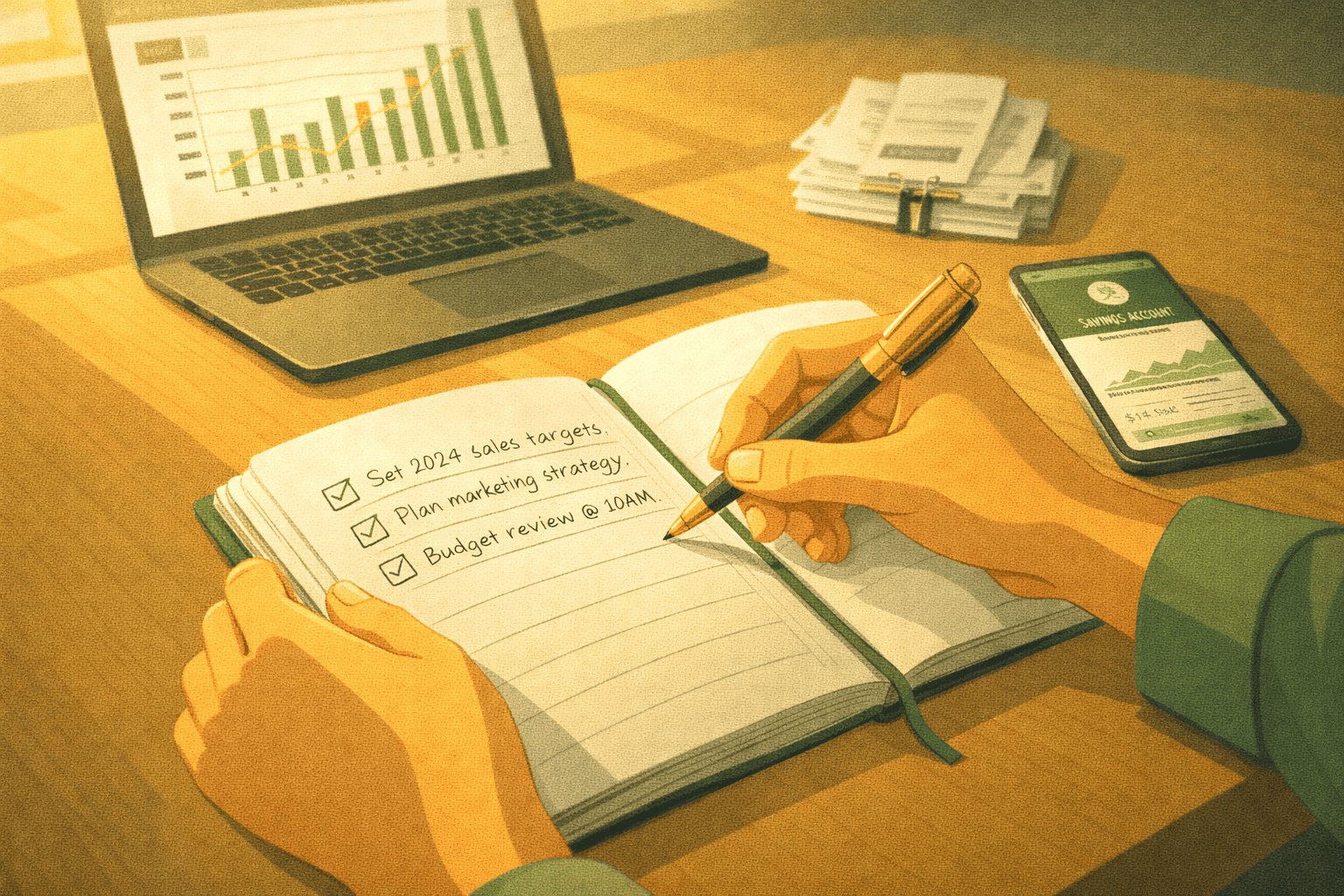
Ready to take control? Here’s a week-by-week roadmap to get your books in order.
Day 1-2: Separate your money. Open a business bank account and get a business credit card. Most banks can do this in a day. Start using them for all business purchases—and stop mixing funds immediately. This sounds simple, but if you’ve been blending personal and business expenses for months (or years), untangling the history takes time.
Day 3: Set up accounting software. QuickBooks Online works well for e-commerce. Connect your Amazon seller account and your bank accounts. Let the software pull in transactions. Fair warning: the initial setup involves decisions about your chart of accounts, sales tax tracking, and category mapping. Getting this wrong now creates headaches later.
Day 4: Break down your deposits. Amazon payouts bundle sales, fees, refunds, and reimbursements into one deposit. Recording just the deposit as “income” inflates your revenue and hides your true costs. Tools like Link My Books connect to your selling platforms and break down each payout automatically. It’s a game-changer… but it requires proper setup to categorize everything correctly.
Day 5: Organize your receipts. Scan all paper receipts and save them to Google Drive, Dropbox, or directly into QuickBooks. Create folders by month. Label clearly. This protects your deductions in case of an audit. The challenge? Going back through months of unorganized expenses is tedious work.
Day 6: Do a nexus check. Pull your Amazon Inventory Event Detail report. Find where your inventory is stored. Make a list of states and research each state’s sales tax requirements. Note which ones need registration.
Day 7: Schedule regular bookkeeping time. Block 60-90 minutes each week to review transactions. Reconcile accounts monthly. Consistency is what keeps small issues from becoming big problems.
Feeling overwhelmed?
Here’s the truth: each of these steps has layers of complexity that a short guide can’t fully cover. Chart of accounts decisions. Proper categorization. Multi-sales channel settlements. Reconciling months of messy transactions. It adds up fast.
If managing all of this feels like too much on top of running your business, that’s exactly what we’re here for. At Tall Oak Advisors, we handle e-commerce bookkeeping so you can focus on growth—not spreadsheets. We even cover the cost of Link My Books for our bookkeeping clients, so your Amazon payouts are automatically broken down and categorized correctly from day one.
Want to talk through your situation? Schedule a free strategy session and let’s see if we’re a good fit.
state’s rules. File on time in every state where you owe.
Legal Requirements You Must Know
1099-K reporting has changed. For 2025, platforms report transactions over $2,500 to the IRS. Your records must match what they report. If they don’t match, expect a letter. The IRS cross-references everything now.
Record keeping requirements are strict. The IRS can ask for records going back 3 years. If they suspect fraud, they can go back 6 years. Keep receipts. Keep bank statements. Keep everything. Storage is cheap. Penalties are expensive.
Business structure matters. Sole proprietor? File Schedule C with your personal return by April 15. S-Corp or Partnership? File by March 15. Miss these dates and penalties start immediately.
Self-employment tax is real. As a business owner, you pay both halves of Social Security and Medicare. That’s 15.3% on top of income tax. Many new sellers forget this and get surprised. Plan for it.
State income tax varies. Some states have no income tax. Others take 10% or more. Know your
The Bottom Line
Good enough bookkeeping isn’t good enough. Not when it costs you thousands every year. Not when it keeps you up at night worrying about the IRS.
The math is simple:
Missed deductions: $2,000-5,000 per year
Penalties and interest: $500-2,000 per year
CPA cleanup costs: $1,500-3,000
Potential audit defense: $8,000-23,000
Bad decisions from wrong data: Impossible to calculate
Total risk: $4,000-33,000+ per year.
Compare that to the cost of doing it right. A few hundred for software. Maybe a few thousand for professional help.
The choice is clear. Fixing this takes time. But it saves money. It saves stress. It lets you focus on growing your business instead of fearing tax season.
Start today. Your future self will thank you.
━━━━━━━━━━━━━━━━━━━━━━━━━━━━━━━━━━
Need Help Getting Your Books Right?
We help e-commerce sellers fix their bookkeeping, save money on taxes, and grow with confidence. Our team understands the unique challenges of selling online.
Schedule a free consultation today.
━━━━━━━━━━━━━━━━━━━━━━━━━━━━━━━━━━
Disclaimer: This article provides general information only. It is not tax or legal advice. Tax laws change often. Consult a qualified CPA or tax professional for advice specific to your situation. Every business is different and needs personalized guidance.
Take Control of Your Finances Today!
Whether you’re a Reseller (Wholesale, Retail Arbitrage, Online Arbitrage, Dropshipping) or a Brand Owner, managing finances is key to your success. We support eCommerce businesses across major platforms like Amazon, Shopify, eBay, Walmart, Etsy, BigCommerce, and beyond.
See if you qualify for a free strategy session with our team to learn how Tall Oak Advisors can streamline your bookkeeping and ensure accurate tax preparation for your business.
Need a quick quote?
Or explore our range of free resources crafted specifically for eCommerce sellers:
- Business Tax Worksheet
- Frequently Asked Questions About Taxes and Bookkeeping
- Tax Write-Offs Every Amazon and Shopify Seller Should Know
Take the first step toward a stronger financial future and position your business for long-term success.
A Simple Guide for E-Commerce Sellers
Tax season is coming. Are you ready?
What most people don’t realize: Most e-commerce sellers lose money in April. They don’t lose it to bad products. They don’t lose it to slow sales. They lose it to messy books.
The IRS assessed over $84 billion in civil penalties in 2024 and in 2025, IRS investigators identified $4.5 billion in tax fraud alone, more than double the prior year. 2. Most of these came from bad records. Over 20% of small businesses got IRS notices for bookkeeping mistakes last year. Audit risk goes up 40% when records are messy.
But here is the good news. These mistakes are easy to fix. You just need to know what to look for.
This guide will show you the five biggest mistakes. You will see real examples. You will get step-by-step fixes. By the end, you’ll know how to save thousands and sleep better at night.
The Hidden Cost of ‘Good Enough’ Bookkeeping
Let’s talk about real money. Here is what sloppy bookkeeping can cost you:
Missed deductions: $2,000 to $5,000 per year. Most sellers forget about software costs. They miss shipping supplies. They skip home office deductions. Every missed deduction means paying taxes you don’t owe.
Late filing penalty: 5% of what you owe each month. This can reach 25% of your tax bill. File late by two months? You add 10% to your bill. File more than 60 days late? Minimum penalty is $510.
Underpayment interest: 7% per year right now. The IRS compounds this daily. A $10,000 mistake costs $700 in interest alone. And interest keeps growing until you pay.
CPA cleanup fees: $1,500 to $3,000. Accountants charge more when your books are a mess. They spend hours fixing problems. Clean records cost less to file. Messy records cost double or triple.
Audit defense costs: $8,000 to $23,000. If your messy books trigger an audit, you’ll need help. Professional audit defense is expensive. Prevention is much cheaper.
Add it up. A seller making $200,000 in sales can easily lose $7,000 or more to bad bookkeeping. Some lose much more.
A Real-World Example
Consider Leilah. She runs a clothing store on Amazon. She made $480,000 in sales last year. Her books were a mess. She tracked cash sales on sticky notes. She wrote off meals with no receipts. She claimed 100% car deduction even though she used her car for personal trips too.
The IRS sent her an audit notice. They questioned $32,500 in deductions. She couldn’t prove many of them. After penalties, interest, and legal fees, she paid over $15,000.
Don’t be like Leilah. Good records would have saved her all of that money.
Mistake #1: Recording Deposits as Revenue
This is the number one mistake we see. It looks simple but it causes big problems. And almost every new seller makes it.
Amazon pays you $5,000 this week. You see the deposit in your bank. You record $5,000 as income. This feels right but it is wrong.
That $5,000 deposit is not your income. It is what’s left after many things happen. Your actual sales might be $6,500. Amazon took $800 in fees. Customers returned $400 in products. Sales tax collected was $300. What hit your bank was just what remained.
When you just record $5,000 as income, you lose all that detail. And that detail matters.
Why This Hurts You
You lose deductions. Those $800 in Amazon fees? They are a business expense. You should deduct them. But if you only record the deposit, you never capture that expense. You pay taxes on money you never actually kept.
Your profit margins look wrong. You might think you make 30% profit. But really you make 15%. This leads to bad pricing. You might spend too much on ads. You might buy too much inventory. Wrong numbers lead to wrong decisions.
Sales tax becomes a mess. That $300 in sales tax? It’s not your money. It belongs to the state. You just collected it. If you record it as income, you’ll pay taxes on money that isn’t yours. Then you’ll owe the state too. You lose twice.
Month-to-month tracking breaks. Amazon payouts usually arrive every two weeks but not always on the same schedule. A single payout often includes sales from two different months. Recording just the deposit makes it hard to know what you earned when.
The Fix
Break down every deposit. Record each piece in the right place. Use software like Link My Books. These tools connect to Amazon and do the work for you.
At minimum, track these for each payout:
Gross sales (your true income before anything is taken out)
Platform fees (your expense – FBA fees, referral fees, storage fees)
Refunds (reduces your income)
Sales tax collected (a liability, not income – you owe this to the state)
Shipping charges (may be income or expense depending on your setup)
Do this for every payout. Every two weeks. It takes time but it saves money.
Mistake #2: Messing Up Cost of Goods Sold
Your inventory is probably your biggest cost. Getting it wrong changes everything about your finances. COGS errors can inflate or deflate your profits by 50% or more.
Here is what many sellers do wrong:
Recording inventory as an expense when purchased. This is wrong. Inventory is an asset until you sell it. When you buy $50,000 in products, you haven’t lost $50,000. You’ve traded cash for inventory. Both are assets. The inventory only becomes an expense when you sell it.
Forgetting to include all costs. COGS isn’t just the product price. It includes shipping to your warehouse. It includes customs fees. It includes FBA prep costs. It includes packaging materials. Every dollar spent getting products ready to sell is part of COGS.
Mixing up COGS and operating expenses. Amazon FBA fulfillment fees of $3.50 per unit? That’s COGS. It’s directly tied to each sale. Your monthly advertising spend? That’s an operating expense. Different categories mean different things for your profit calculations.
Not tracking inventory shrinkage. Products get lost. They get damaged. Customers return broken items. Amazon loses things in their warehouse. All of this affects your true COGS. If you don’t track it, your numbers are wrong.
A Real Example
Say you buy $50,000 of inventory in December. You sell $20,000 worth by year end. The rest sits in your warehouse.
Wrong way: Record $50,000 as an expense in December. This makes your profits look much lower than they are. You might think you lost money when you actually made money.
Right way: Record $20,000 as COGS (the cost of what you sold). Keep $30,000 as inventory on your balance sheet. It’s still an asset. It will become COGS when you sell it next year.
The difference? Using the wrong method, you might show a $10,000 loss. Using the right method, you might show a $15,000 profit. Same sales. Same purchases. Very different picture.
The Fix
Use the accrual method. Match expenses to the sales they create. Track inventory carefully. Do physical counts. Reconcile inventory numbers every month.
Include all of these in your COGS:
Product wholesale cost
Inbound shipping to Amazon or your warehouse
Customs, duties, and import fees
FBA fulfillment fees per unit
Packaging and labeling materials
Prep service fees
Mistake #3: Missing Quarterly Tax Payments
The IRS wants money throughout the year. Not just in April. This surprises many new sellers who used to have taxes withheld from a regular job.
The rule is simple. If you expect to owe more than $1,000 in taxes, you must pay quarterly. Miss these payments and you’ll pay penalties. Even if you file on time in April.
Many sellers have a great year. Sales grow fast. Then April comes. They find out they owe $15,000. Plus penalties for not paying quarterly. It’s a painful surprise.
2026 Quarterly Due Dates
Q1 (January-March): Due April 15, 2026
Q2 (April-May): Due June 16, 2026
Q3 (June-August): Due September 15, 2026
Q4 (September-December): Due January 15, 2027
Mark these dates now. Set calendar reminders. Missing them costs money.
The Safe Harbor Rule
The safe harbor rule can protect you from penalties: Pay at least 100% of last year’s tax bill through your estimated payments, and you’re covered… even if you end up owing more when you file.
But wait. If you made more than $150,000 last year (married filing jointly), you need to pay 110% of last year’s taxes to be safe. Not just 100%.
Important: Safe harbor does not mean you won’t owe taxes. You’ll still owe the difference when you file. It just protects you from the extra penalty on top of what you owe.
The Fix
Set aside 25-30% of your profits each month. Put it in a separate savings account. Don’t touch it. Pay quarterly using IRS Form 1040-ES. You can pay online at IRS.gov.
If you’re new and don’t know what to expect, use last year’s tax as your guide. Pay one quarter of that amount each quarter. You’ll stay penalty-free.
Mistake #4: Ignoring Sales Tax Nexus
Do you sell on Amazon FBA? Then your products sit in warehouses across the country. This creates tax obligations you might not know about. It’s called nexus.
Yes, Amazon collects sales tax for you in most states. This is thanks to Marketplace Facilitator laws. But that doesn’t mean you’re done. Amazon collecting is not the same as Amazon handling everything.
What You Still Must Do
Register in states where you have nexus. Amazon does not do this for you. If your inventory sits in a California warehouse, you may need to register with California. Same for Texas, Florida, and every other state where Amazon stores your stuff.
File returns in many states. Even if Amazon remitted the tax, some states want a return from you. These are called zero-dollar returns. You’re not paying anything. But the state wants to know you exist and are compliant.
Track where your inventory sits. Amazon moves your products without asking. They shift inventory to optimize shipping times. Check your Inventory Event Detail reports in Seller Central. You might have nexus in states you’ve never visited.
Handle non-Amazon sales yourself. If you also sell on Shopify, Etsy, or your own website, Amazon doesn’t collect tax for those. You must handle those channels yourself.
States That Still Require Filing
Even with Amazon collecting, these states often require returns: California, Texas, Florida, Pennsylvania, New York, Illinois, and Ohio. Check each state’s rules. They change often.
The Fix
Do a nexus study. Find all the states where you have obligations. Register with each state. File on time. Use software like TaxJar or Avalara to track this. Or hire a sales tax professional. The cost of compliance is far less than the cost of penalties.
Mistake #5: Mixing Personal and Business Money
This seems minor. It’s not. Mixed finances cause huge problems. And it’s one of the easiest things to fix.
IRS red flag. Mixed accounts make auditors suspicious. If you can’t keep business and personal separate, they wonder what else is wrong. It invites extra attention you don’t want.
Lost deductions. Business expenses hidden in personal spending get missed. You bought $200 in shipping supplies at Staples? If it’s on your personal card mixed with groceries and gas, you might forget it. That’s money lost.
Harder to prove expenses. In an audit, you must show proof. Mixed accounts make this very hard. You’ll spend hours sorting through statements trying to identify business purchases.
Hurts your business value. Want to sell your business someday? Buyers want clean books. Messy records kill deals or lower your price. Clean separation increases your company’s value.
The Fix
Open a business bank account today. Most banks offer free business checking. Get a business credit card too. Use them only for business purchases. Never pay personal bills from business accounts. Never pay business expenses from personal accounts.
Pay yourself a regular salary. Transfer money from business to personal on a set schedule. This is clean. This is traceable. This is what the IRS expects to see.
Deductions Most Sellers Miss
Good bookkeeping means catching every deduction. Here are ones many sellers forget. These add up to thousands:
Software subscriptions. Canva, Mailchimp, inventory tools, shipping software, accounting software, listing tools. Every monthly fee counts. A seller with $200 in monthly software costs misses $2,400 per year in deductions.
Home office. Use a room only for business? Deduct part of your rent, utilities, and internet. The simple method gives you $5 per square foot, up to 300 square feet. That’s up to $1,500 in easy deductions.
Home storage. Store inventory in your garage or spare room? You can deduct that space too. Different rules than home office. You don’t need exclusive use. If you store $20,000 in products in 200 square feet of your home, you can deduct that portion of your housing costs.
Payment processing fees. PayPal, Stripe, Square. Credit card processing adds up. A seller doing $100,000 in sales through PayPal pays about $3,000 in fees. All deductible.
Phone and internet. Use them for business? Deduct the business percentage. If half your calls are business calls, deduct half your phone bill.
Education and training. Courses, books, conferences about e-commerce are deductible. That $500 Amazon selling course? Deductible. That $1,000 conference ticket? Deductible.
Insurance. Product liability, general liability, cyber insurance. All deductible business expenses.
Mileage. Driving to suppliers, the post office, trade shows, or the bank? The 2025 rate is 70 cents per mile. Drive 1,000 miles for business and that’s $700 in deductions.
Bank fees. Monthly account fees, wire transfer fees, overdraft fees on your business account. All deductible.
Your Action Plan: Fix Your Books in 7 Days
Ready to take control? Here’s a week-by-week roadmap to get your books in order.
Day 1-2: Separate your money. Open a business bank account and get a business credit card. Most banks can do this in a day. Start using them for all business purchases—and stop mixing funds immediately. This sounds simple, but if you’ve been blending personal and business expenses for months (or years), untangling the history takes time.
Day 3: Set up accounting software. QuickBooks Online works well for e-commerce. Connect your Amazon seller account and your bank accounts. Let the software pull in transactions. Fair warning: the initial setup involves decisions about your chart of accounts, sales tax tracking, and category mapping. Getting this wrong now creates headaches later.
Day 4: Break down your deposits. Amazon payouts bundle sales, fees, refunds, and reimbursements into one deposit. Recording just the deposit as “income” inflates your revenue and hides your true costs. Tools like Link My Books connect to your selling platforms and break down each payout automatically. It’s a game-changer… but it requires proper setup to categorize everything correctly.
Day 5: Organize your receipts. Scan all paper receipts and save them to Google Drive, Dropbox, or directly into QuickBooks. Create folders by month. Label clearly. This protects your deductions in case of an audit. The challenge? Going back through months of unorganized expenses is tedious work.
Day 6: Do a nexus check. Pull your Amazon Inventory Event Detail report. Find where your inventory is stored. Make a list of states and research each state’s sales tax requirements. Note which ones need registration.
Day 7: Schedule regular bookkeeping time. Block 60-90 minutes each week to review transactions. Reconcile accounts monthly. Consistency is what keeps small issues from becoming big problems.
Feeling overwhelmed?
Here’s the truth: each of these steps has layers of complexity that a short guide can’t fully cover. Chart of accounts decisions. Proper categorization. Multi-sales channel settlements. Reconciling months of messy transactions. It adds up fast.
If managing all of this feels like too much on top of running your business, that’s exactly what we’re here for. At Tall Oak Advisors, we handle e-commerce bookkeeping so you can focus on growth—not spreadsheets. We even cover the cost of Link My Books for our bookkeeping clients, so your Amazon payouts are automatically broken down and categorized correctly from day one.
Want to talk through your situation? Schedule a free strategy session and let’s see if we’re a good fit.
state’s rules. File on time in every state where you owe.
Legal Requirements You Must Know
1099-K reporting has changed. For 2025, platforms report transactions over $2,500 to the IRS. Your records must match what they report. If they don’t match, expect a letter. The IRS cross-references everything now.
Record keeping requirements are strict. The IRS can ask for records going back 3 years. If they suspect fraud, they can go back 6 years. Keep receipts. Keep bank statements. Keep everything. Storage is cheap. Penalties are expensive.
Business structure matters. Sole proprietor? File Schedule C with your personal return by April 15. S-Corp or Partnership? File by March 15. Miss these dates and penalties start immediately.
Self-employment tax is real. As a business owner, you pay both halves of Social Security and Medicare. That’s 15.3% on top of income tax. Many new sellers forget this and get surprised. Plan for it.
State income tax varies. Some states have no income tax. Others take 10% or more. Know your
The Bottom Line
Good enough bookkeeping isn’t good enough. Not when it costs you thousands every year. Not when it keeps you up at night worrying about the IRS.
The math is simple:
Missed deductions: $2,000-5,000 per year
Penalties and interest: $500-2,000 per year
CPA cleanup costs: $1,500-3,000
Potential audit defense: $8,000-23,000
Bad decisions from wrong data: Impossible to calculate
Total risk: $4,000-33,000+ per year.
Compare that to the cost of doing it right. A few hundred for software. Maybe a few thousand for professional help.
The choice is clear. Fixing this takes time. But it saves money. It saves stress. It lets you focus on growing your business instead of fearing tax season.
Start today. Your future self will thank you.
━━━━━━━━━━━━━━━━━━━━━━━━━━━━━━━━━━
Need Help Getting Your Books Right?
We help e-commerce sellers fix their bookkeeping, save money on taxes, and grow with confidence. Our team understands the unique challenges of selling online.
Schedule a free consultation today.
━━━━━━━━━━━━━━━━━━━━━━━━━━━━━━━━━━
Disclaimer: This article provides general information only. It is not tax or legal advice. Tax laws change often. Consult a qualified CPA or tax professional for advice specific to your situation. Every business is different and needs personalized guidance.
Take Control of Your Finances Today!
Whether you’re a Reseller (Wholesale, Retail Arbitrage, Online Arbitrage, Dropshipping) or a Brand Owner, managing finances is key to your success. We support eCommerce businesses across major platforms like Amazon, Shopify, eBay, Walmart, Etsy, BigCommerce, and beyond.
See if you qualify for a free strategy session with our team to learn how Tall Oak Advisors can streamline your bookkeeping and ensure accurate tax preparation for your business.
Need a quick quote?
Or explore our range of free resources crafted specifically for eCommerce sellers:
- 7 Profit Crushing Mistakes That Will Destroy Your eCommerce Business
- Business Tax Worksheet
- Frequently Asked Questions About Taxes and Bookkeeping
- Tax Write-Offs Every Amazon and Shopify Seller Should Know
Take the first step toward a stronger financial future and position your business for long-term success.